
 Study Architecture
  ProPEL
 2023 Winners
2023 Timber Education Prize Winners
Overview
The Softwood Lumber Board and the Association of Collegiate Schools of Architecture (ACSA) announce the winners of the 2023 Timber Education Prize. These innovative courses will be taught at architecture schools across North America in the coming years.
These courses seek to recognize effective and innovative curricula that create a stimulating and evidence-based environment for learning about timber. The use of wood as a building material can achieve multiple design, construction, and performance objectives. Therefore, these courses equip students with the knowledge and design skills to achieve green building goals in a range of project types.
The jury selected five courses to receive a cash prize and support to lead their course at their host institution within the next two years. In addition the jury selected two courses to receive honorable mentions, for their impactful courses. The five winning course proposals will be presented at the 2023 ACSA/AIA Intersections Research Conference: Material Economies.
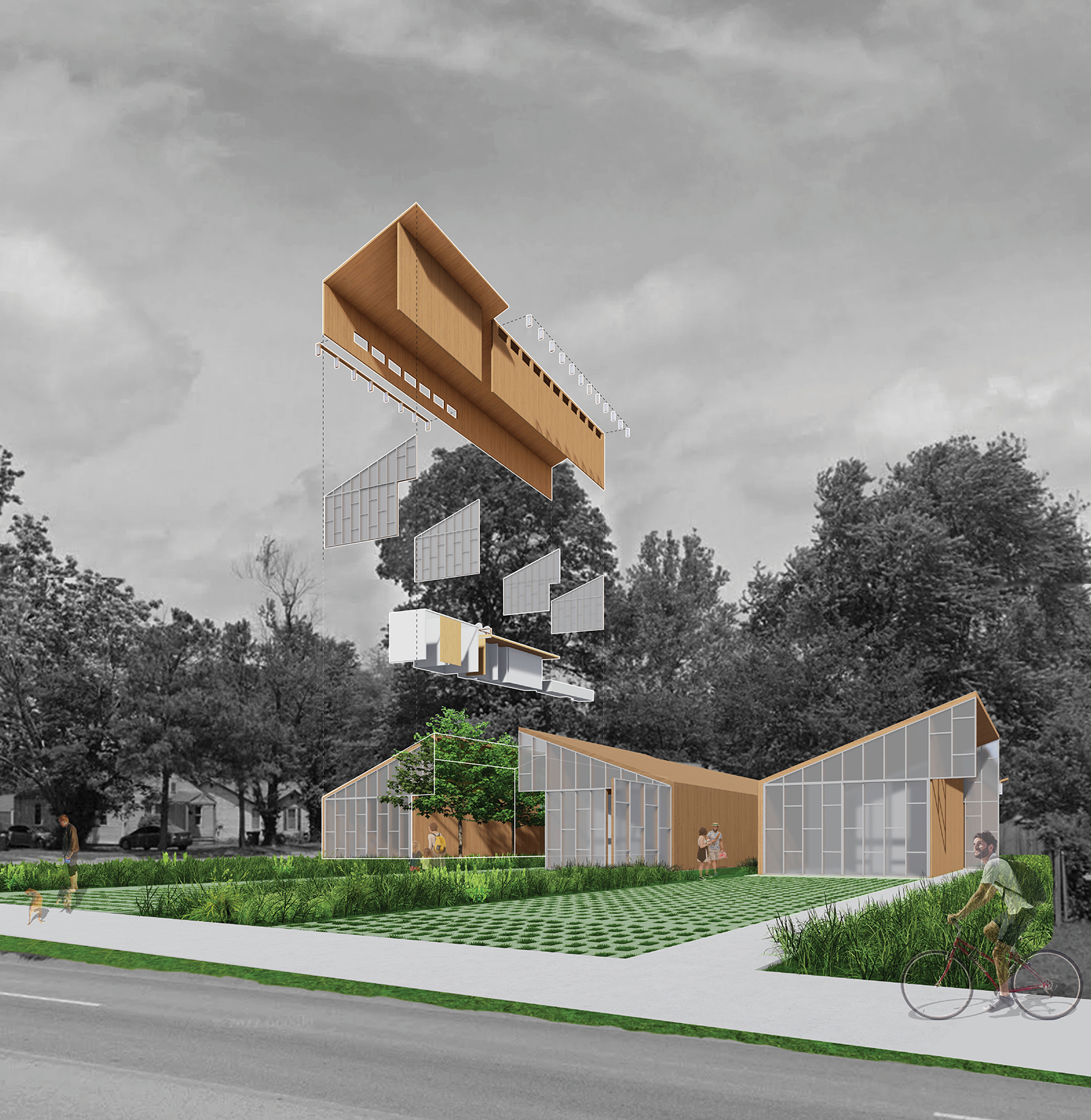
John Folan & Candice Adams, University of Arkansas
With nearly 19 million acres of forest land in Arkansas constituting 56% of land cover, architectural design that utilizes wood and timber construction provides a significant opportunity to impact the state’s economy. The Fay Jones School of Architecture + Design Urban Design Build Studio (UDBS) has initiated exploration of innovative mass timber technologies that capitalize on the abundance of wood products materialized within the state.
Specifically, the STREET LEGAL advanced design-build studio will explore the potential of Wave Layered Timber (WLT) as a viable enclosure/structural system to address the affordable housing crisis in the Northwest Arkansas Metropolitan Region. The prototype designed and constructed through the studio will demonstrate the use of the technology for the first time in the United States, offering an opportunity to influence broader-scale implementation by making it STREET LEGAL.
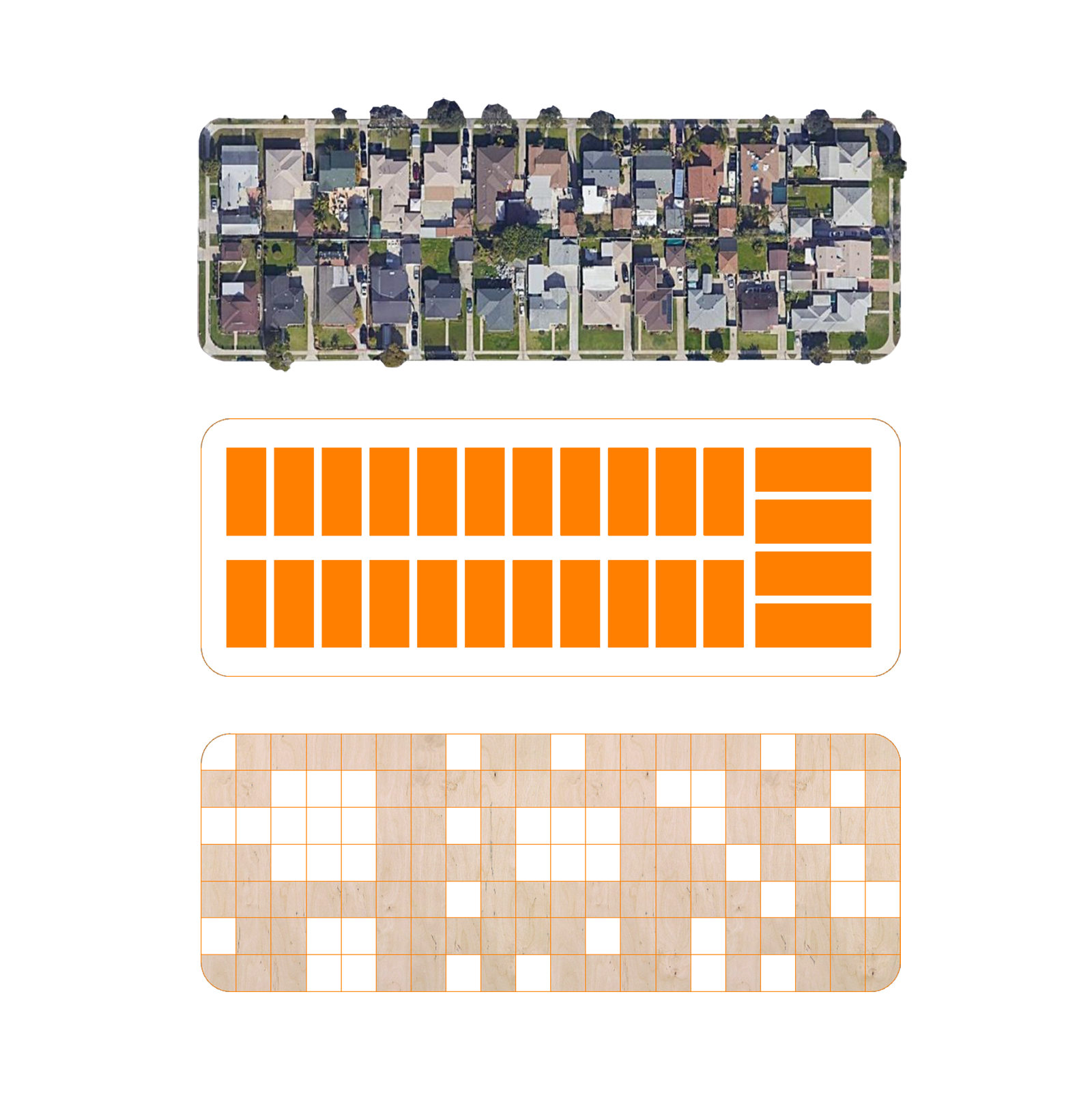
De Peter Yi, University of Cincinnati
Throughout history and across cultures, the use of timber has cultivated an intricate relationship with our living spaces. While modernist imaginaries embraced the new capabilities of concrete, steel, and glass, timber persists as the material that houses the masses, driven by the fine-tuned balance of standardization and customization in the light-frame house. Yet, the single-family house and its requisite culture of sprawl and consumption underlie our current climate predicament. Furthermore, the dream of attainable, quality housing for all has not materialized; exclusionary zoning practices mar its past and the shortage of affordable housing casts a pall on its future. Amidst new capabilities of building with wood through the mass timber movement, this course argues for a re-imagining of the social and environmental contracts of housing through the material that shapes it.
Mass timber, at once a prefabricated product, a low-carbon building structure, and a lightweight, workable material, is breathing new life into the modular housing project. Students will explore modular mass timber as the building blocks of housing “villages” that repair existing fabrics while creating new housing imaginaries that are as desirable as they are attainable.
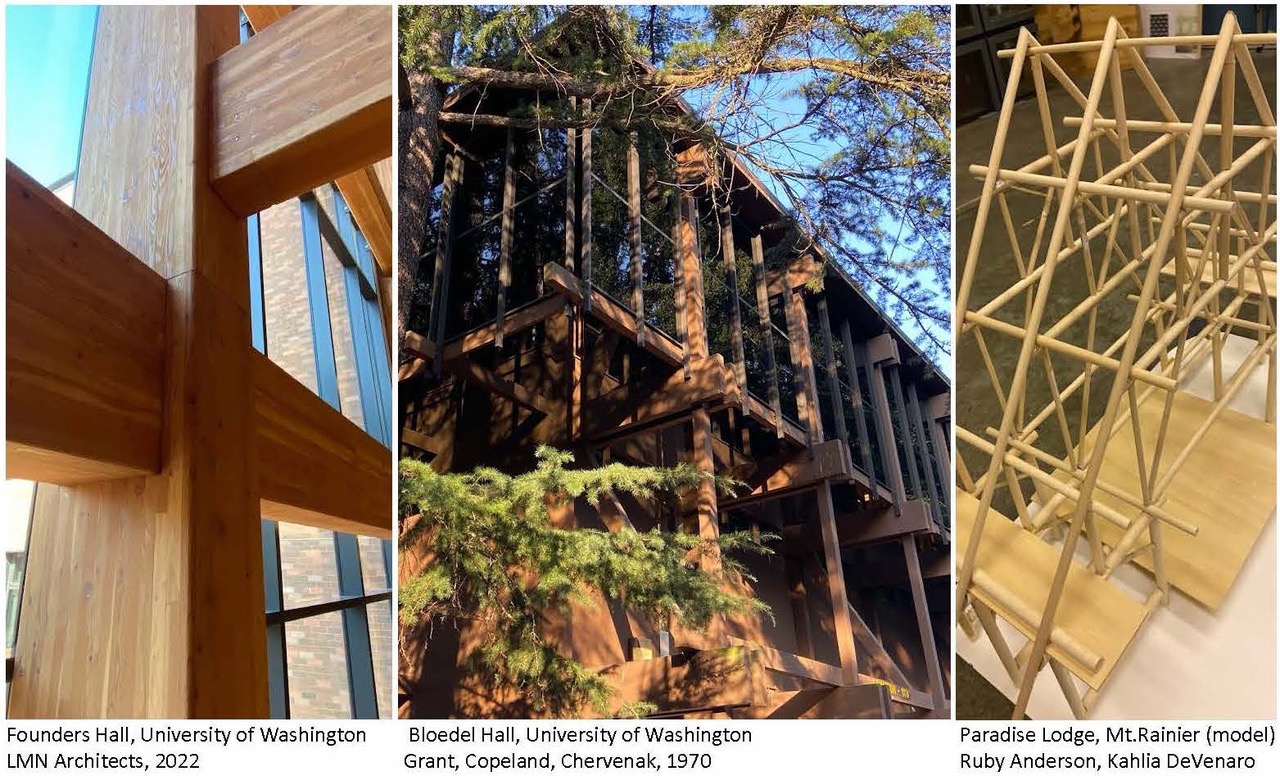
Tyler Sprague, University of Washington
Mass timber has arrived as a significant part of a low-carbon construction future in the Pacific Northwest. While different courses and research projects at the University of Washington address particular, disciplinary aspects of mass timber buildings, none provide an overview of the complex alignment of natural resources, forestry industries, design sensibilities, structural realities and construction logistics that mass timber buildings connect to. This course will provide a building technology-centered discussion of the current state of mass timber to students from many different parts of the University.
This course would appeal directly to architecture, structural engineering and construction management students. Architecture students would leave the class with necessary expertise to schematically design with mass timber in their studio work. Structural engineering students would be able to understand the basic assembly and behavior of structural elements, different connection types, and further explore the lateral challenges of building with timber in a high seismic zone. Construction management students would be able to understand the logistical challenges of sourcing, sequencing, moisture control during construction and cost basics of mass timber for use in future courses.
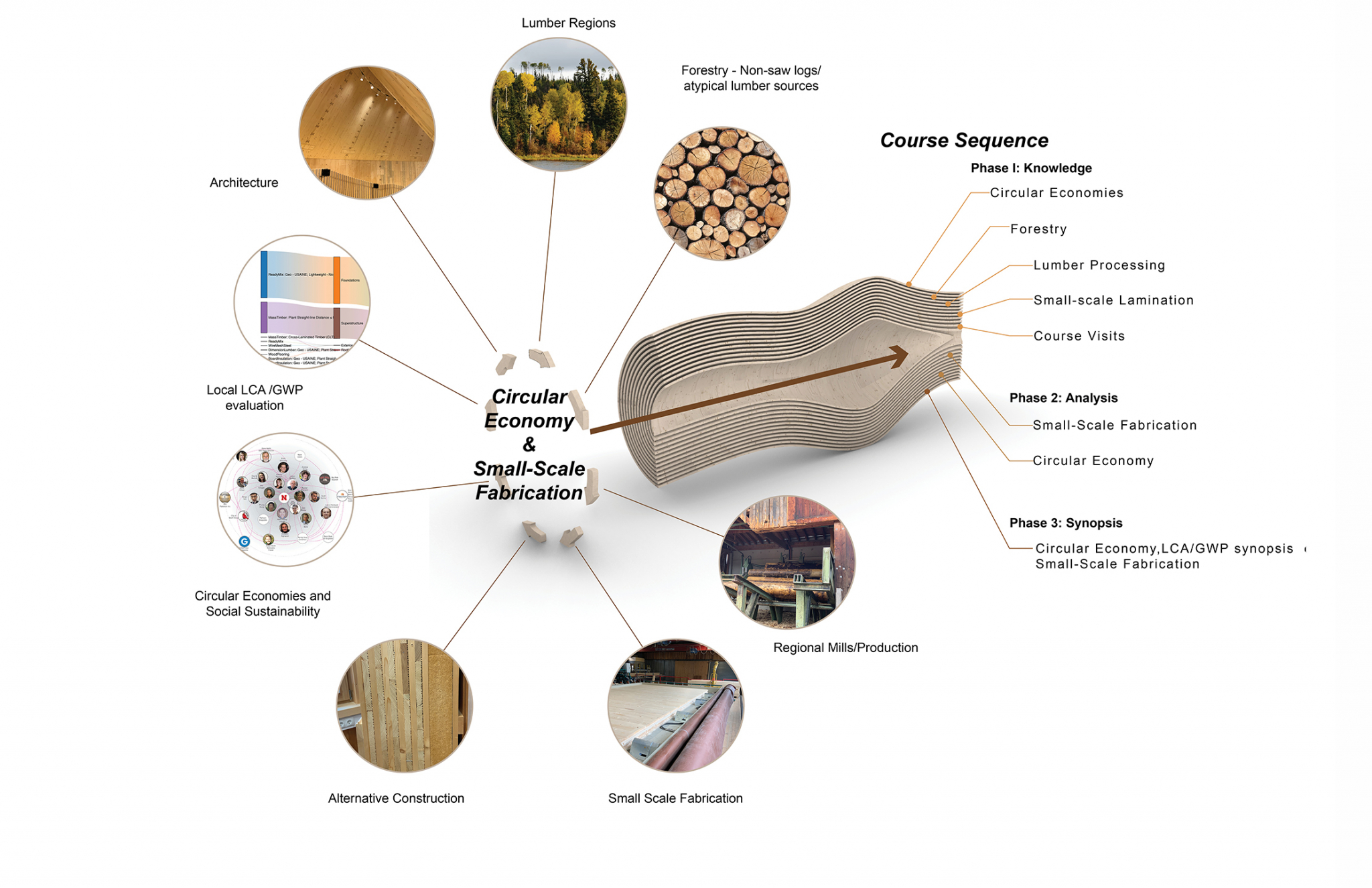
Jason Griffiths, University of Nebraska Lincoln
In a recent interview, Prof. Bohumil Kasal (director of the Fraunhofer Institute for Wood Research) suggested that the ability for mass timber to effectively reduce carbon emissions now depended on global diversification.
While it is clear that the rapid increase in production of mass timber (40K to 1.8 million m3 of CLT in 10 years) has produced a major contribution to carbon reduction, it still has a long way to go. While much of the discussion on GWP has centered upon large-scale mass production (Austria produces over 70% of global CLT), far less attention has been given to the production of localised, regionally specific facilities. From this perspective, mass timber has no comparable equivalent to concrete production, which, today, is a widely available, regionally adaptable construction material. For mass timber to challenge concrete in a meaningful way, it needs similarly adaptable forms of available technologies.
CIRC-LAM is a new course that provides students with knowledge of small-scale mass timber fabrication technologies and their impact on circular economies. It is a three-credit course that teaches students how to establish models of socially sustainable mass timber architecture. It explores how small-scale production (CLT, DLT, NLT, Glu-Lam etc.) can broaden outcomes in terms of sustainable futures.
Laila Seewang, Portland State University
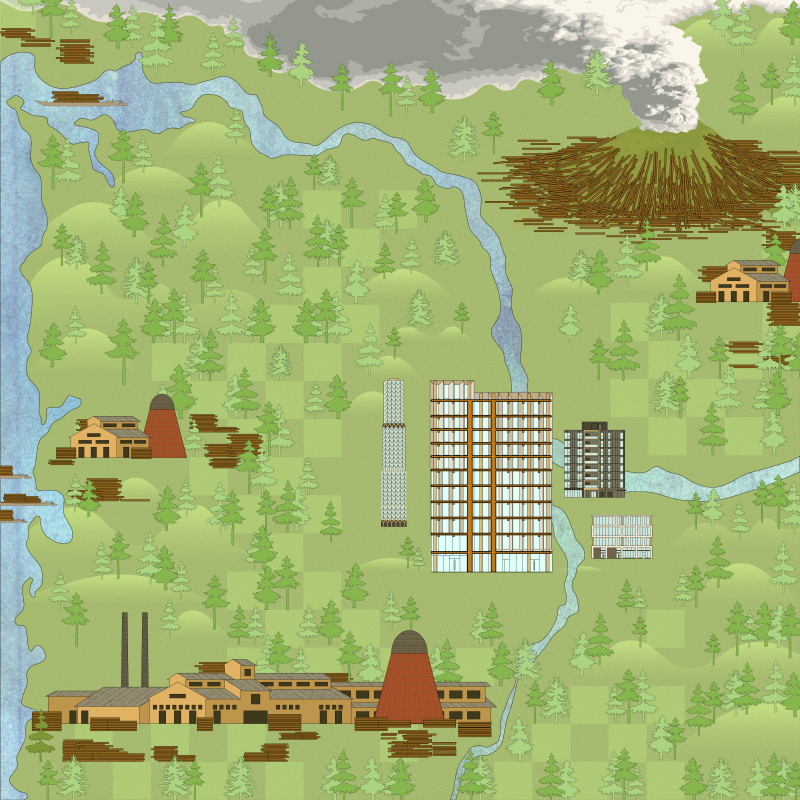
By designing with timber, we design forests. While buildings made of wood can positively impact carbon sequestration, not all wood is created equal. This course addresses a specific gap in historical research and contemporary practice alike: where does our wood come from and how ecologically positive is it, beyond carbon sequestration? Given the complexities in the industrialized timber material chain, it is practically impossible to answer that question.
The Course will map Oregon’s timber territory: the forests, mills, CLT plants, research centers, deconstruction companies and waste sites, using assemblage theory as a method to assess the ecological and social impacts of material choices. We hope to identify potential sites of improvement within this expanded notion of design, across scales, such as: the forest (making sure we know where our wood comes from); the mill (being able to track wood); the joint (developments in wood dowel joints for mass timber). By doing so, we hope to resituate designing with timber as a series of decisions in an expanded material context that involve forests, silviculture, cultural landscapes, milling, labor, investments, trade, and deconstruction.
Image Credit: Molly Jacobs
Time for Timber
Tyler Swingle, University of Texas at Austin
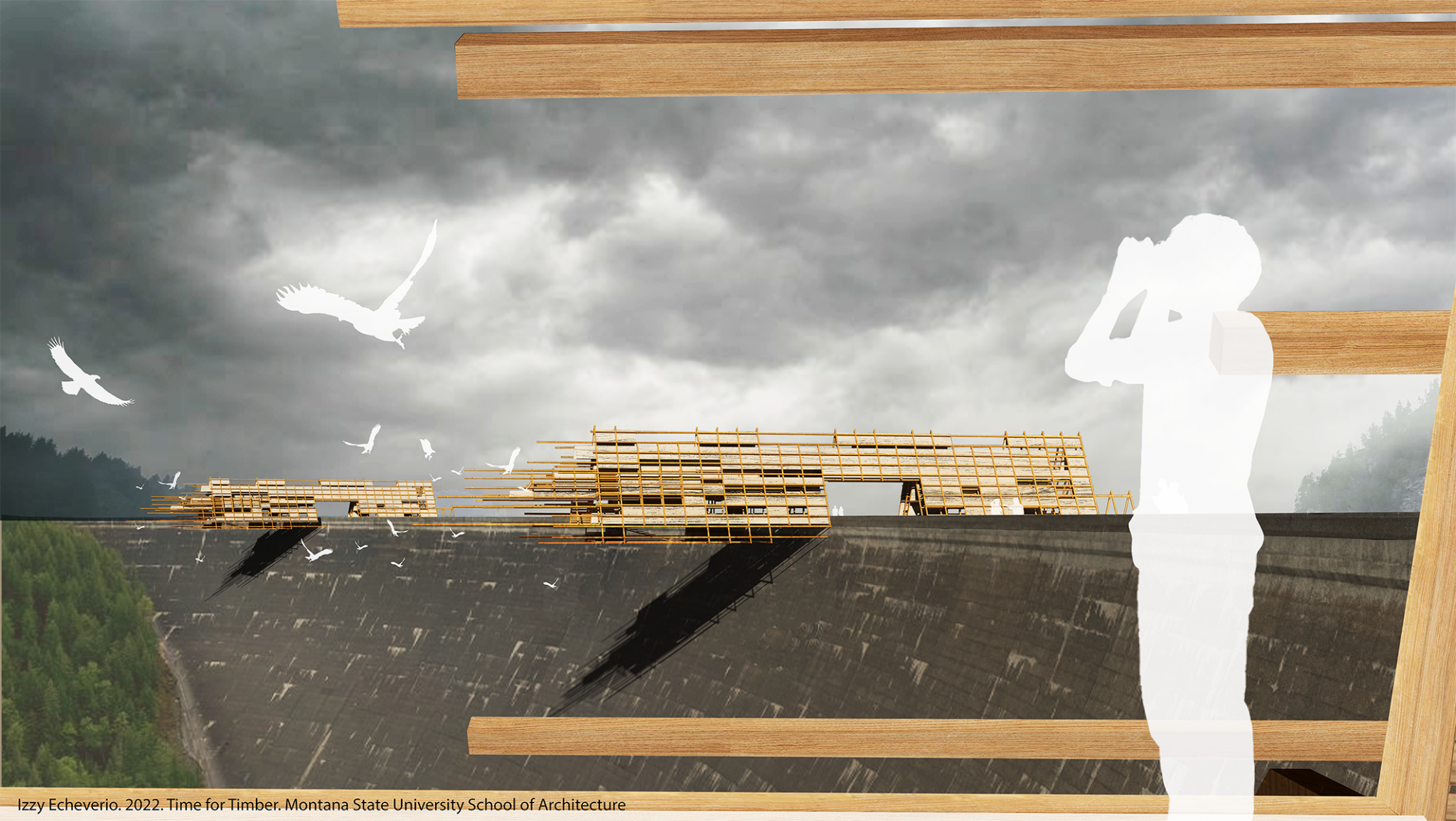
Wood is a unique material. It is a renewable resource with a cellular structure that offers a variety of abilities to swell, shrink, bend and absorb in a responsive manner. Further, its ability to sequester carbon, regrow in cycles, flex for adaption and reuse, and provide unique warm aesthetics sets it apart from other architectural materials. However, as a standardized and mass produced tool for construction, the uniqueness and variety of wood as an architectural material and a building resource is underused and underdeveloped. In dialogue with the timber industry of East Texas and existing material research, this studio will decouple wood as a tool from the expected production and construction methods of contemporary architecture. Rather than conforming to conventions, students will prototype, digitize and develop new formal and performative designs that emphasize the unique material characteristics of wood and speculate on new timber construction standards.
Generation Softwood
Jana VanderGoot & Patricia Cossard, University of Maryland
Generation Softwood is an approach to teaching about embodied energy and timber construction that brings exciting innovations in the area of social justice and construction sustainability education into alignment with national and international level priorities as outlined by the Softwood Lumber Board (SLB) in the areas of wood code, innovation and conversion, and communication. Teaching and course development for Generation Softwood will focus on building skills and expanding knowledge about alternative histories of heavy timber and mechanically-fastened mass timber construction, code development for NLT and DLT construction, small-scale fabrication facilities and techniques that support non-specialized work forces in local tribal communities, and land management practices that include prescribed forest thinning, biomass residuals storage, and verifiable carbon accounting on public and private lands.
Course Content Not Available: This course proposal is continuing their search for partner funding to publish the work in the near future.
Jury
The jury for the 2023 Timber Education Prize includes:

Edward Becker
Virginia Tech

Janna Levitt
LGA Architectural Partners

Judith Sheine
University of Oregon
Softwood Lumber Board
The Softwood Lumber Board is an industry-funded initiative established to promote the benefits and uses of softwood lumber products in outdoor, residential, and non-residential construction and to increase demand for softwood lumber and appearance products. Through strategic investments in pro-wood communications, standards development, design and engineering assistance, research, demonstrations and partnerships, the organization seeks to make softwood lumber the preferred material choice from both an economic and an environmental standpoint.

Association of Collegiate Schools of Architecture
The mission of the Association of Collegiate Schools of Architecture is to lead architectural education and research.
Founded in 1912 by 10 charter members, ACSA is a 501(c)(3) nonprofit association of over 200 member schools in several categories. These include full membership for all accredited programs in the United States and government-sanctioned schools in Canada, candidate membership for schools seeking accreditation, and affiliate membership for schools for two-year and international programs. Through these schools, over 5,000 architecture faculty are represented.
ACSA, unique in its representative role for schools of architecture, provides a forum for ideas on the leading edge of architectural thought. Issues that will affect the architectural profession in the future are being examined today in ACSA member schools. The association maintains a variety of activities that influence, communicate, and record important issues. Such endeavors include scholarly meetings, workshops, publications, awards and competition programs, support for architectural research, policy development, and liaison with allied organizations.
ACSA seeks to empower faculty and schools to educate increasingly diverse students, expand disciplinary impacts, and create knowledge for the advancement of architecture.

Founded in 1912 by 10 charter members, ACSA is an international association of architecture schools preparing future architects, designers, and change agents. Our membership includes all of the accredited professional degree programs in the United States and Canada, as well as international schools and 2- and 4-year programs. Together ACSA schools represent some 7,000 faculty educating more than 40,000 students.
Stay in Touch
Enter your name and email below, and we’ll send you the latest ACSA news and events.
Fill out my online form.
© Copyright 2026 ACSA