
 Study Architecture
  ProPEL
 Recap
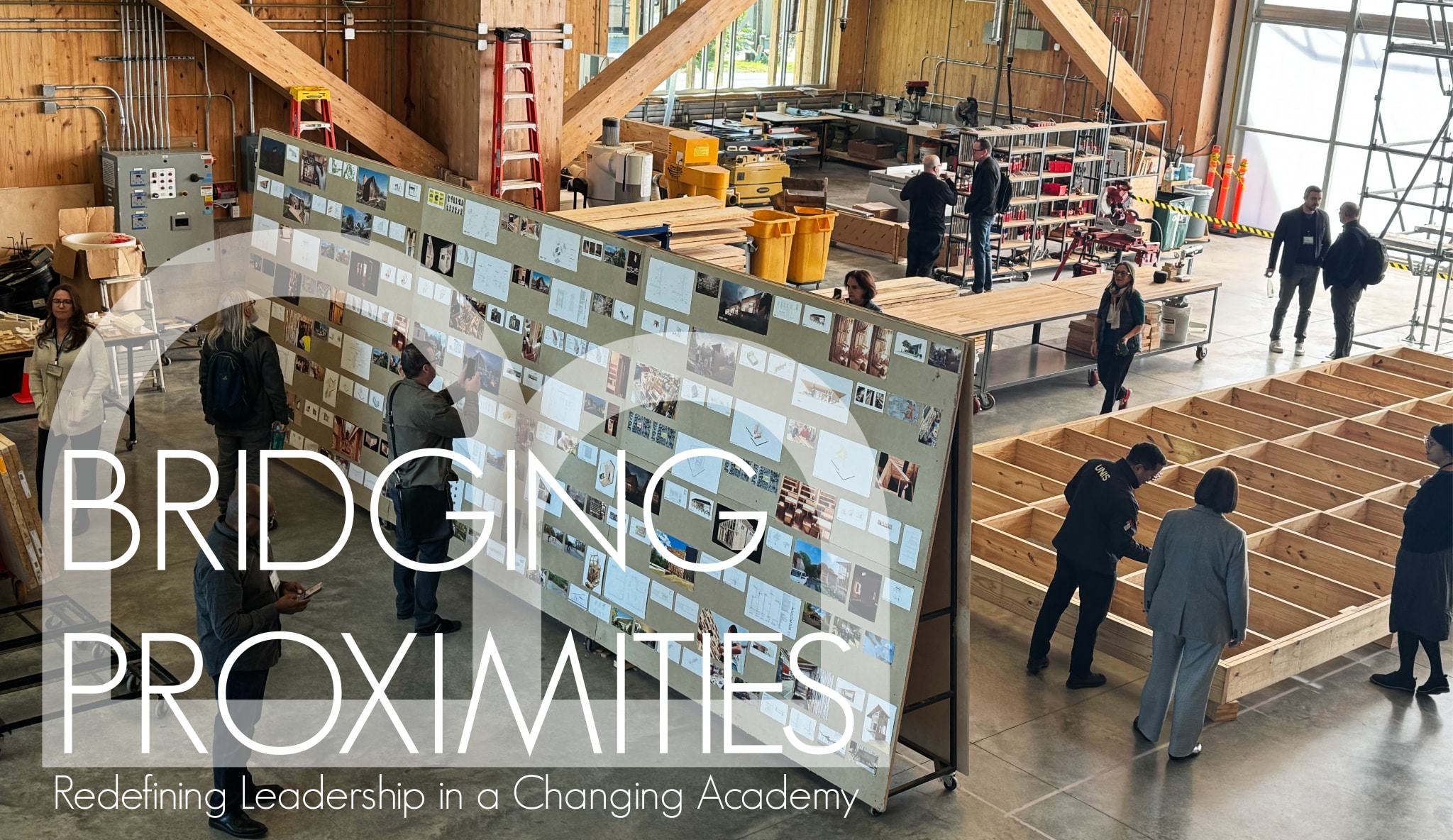
The 2025 ACSA Administrators Conference convened educational leaders in Fayetteville, AR, on November 6-8. Under the theme of “Bridging Proximities: Redefining Leadership in a Changing Academy,” the conference explored the frameworks, relationships, and programs that will shape the future of architectural education.
“As higher education and the profession undergo rapid transformation, architecture administrators are increasingly called to serve as both stewards and bridge-builders,” said ACSA Executive Director Michael J. Monti. “The 2025 Administrators Conference served as a venue to discuss the conceptual, spatial, institutional, and ethical conditions that are shaping architectural education and leadership today. As the world changes, we must ask: What boundaries must we renegotiate? What pedagogical forms foster ethical adjacency? How might proximity deepen accountability or open space for adaptive leadership? The Administrators Conference created a collaborative space for leaders to answer these questions by sharing their challenges and successes.”
Hosted by the University of Arkansas, E. Fay Jones School of Architecture and Design, the conference invited attendees to explore the complex proximities between the academy and the profession, technology and humanity, immediacy and the long-term vision of architectural education.
Day One
Prior to the official start of the conference, attendees had the opportunity to join the E. Fay Jones Architecture Tour. The tour was led by the 2022 ACSA Distinguished Professor recipient Ethel Goodstein-Murphree, who guided the group through Northwest Arkansas to discover and reflect on the mid-century master of organic and nature-inspired designs.

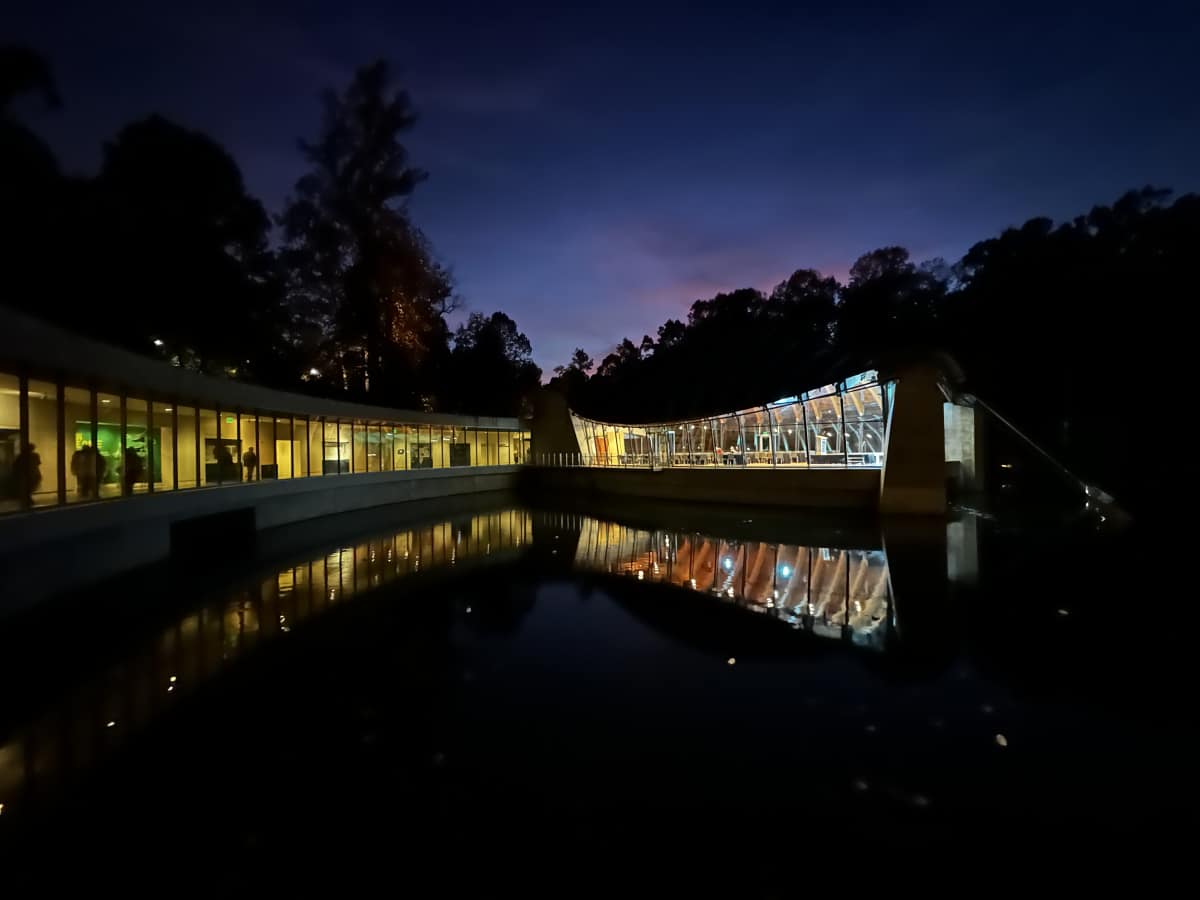
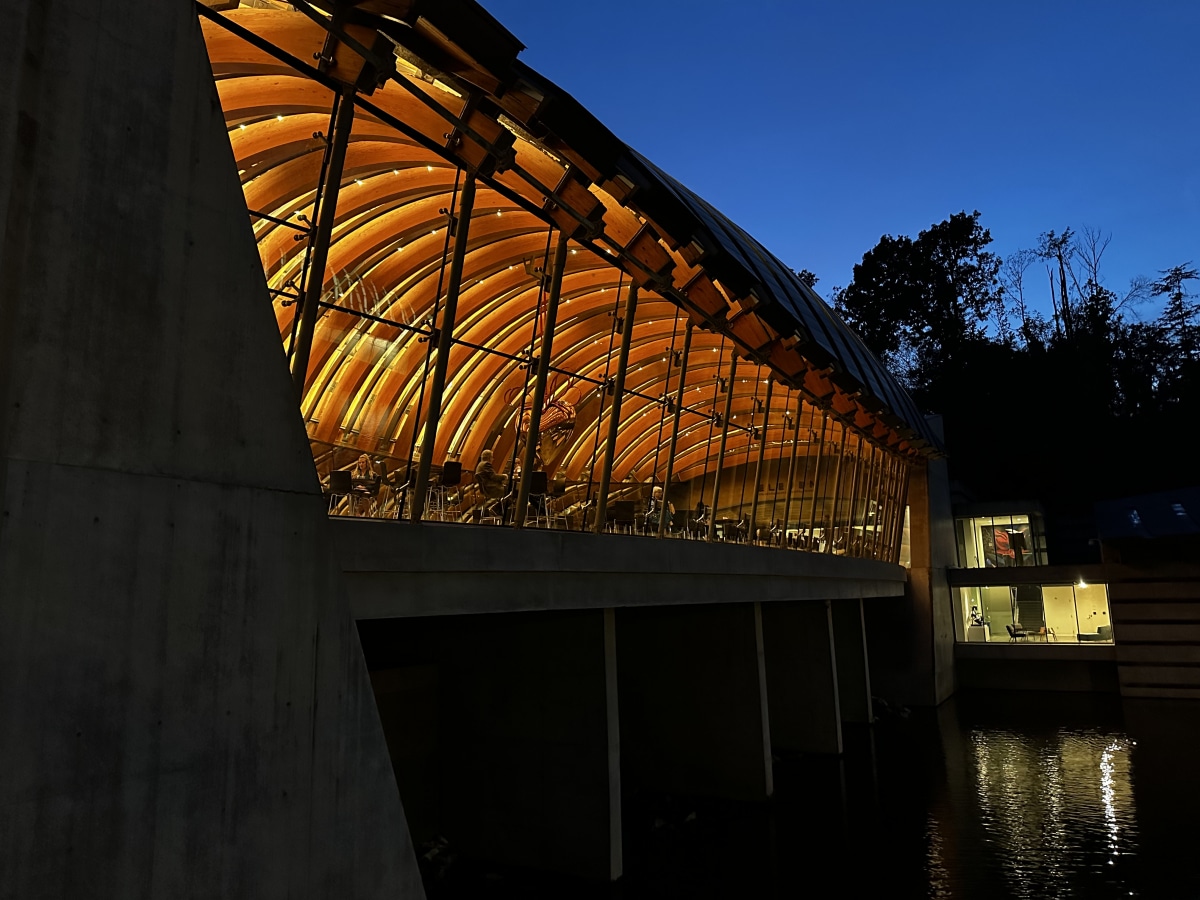
Exterior of the Crystal Bridges Museum of American Art.
The official start had conference-goers travel to the Crystal Bridges Museum of American Art to explore the museum grounds, taking in its sights and spectacular architecture. Designed by world-renowned architect Moshe Safdie, Crystal Bridges includes a series of pavilions nestled around two spring-fed ponds, house galleries, exhibitions, installations, and a large, glass-enclosed gathering hall.
Later that afternoon, ACSA hosted a New Administrators & New Attendees Meet-Up. This event created space for new administrators and first-time conference attendees to forge new connections with peers from around the world.
The Opening keynote address was presented by Robert Burns, Director of the Home Region Program at the Walton Family Foundation. Burns shared insights from his 25 years of experience in workforce housing, philanthropy, community development, and governmental affairs. He highlighted the Foundation’s award-winning Design Excellence program projects in Northwest Arkansas, including a reimagination of Luther George Park in Springdale and a master plan for the Downtown School Campus in Bentonville. Along with these case studies, Burns shared the guiding principles that stand at the core of these projects: Strengthen Public Life, Elevate Standards of Sustainability and Resilience, Celebrate Local Cultures and Places, and Build Regional Capacity.
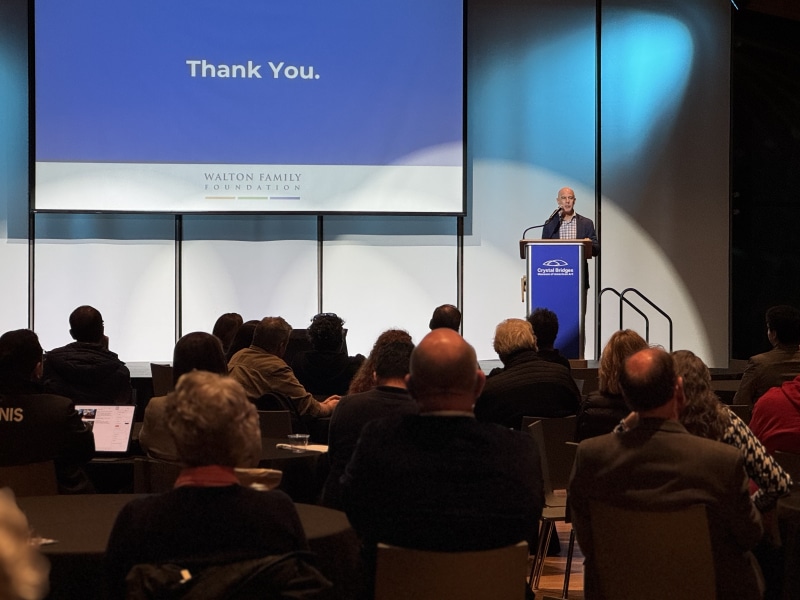
Robert Burns presenting the opening keynote.
Day Two
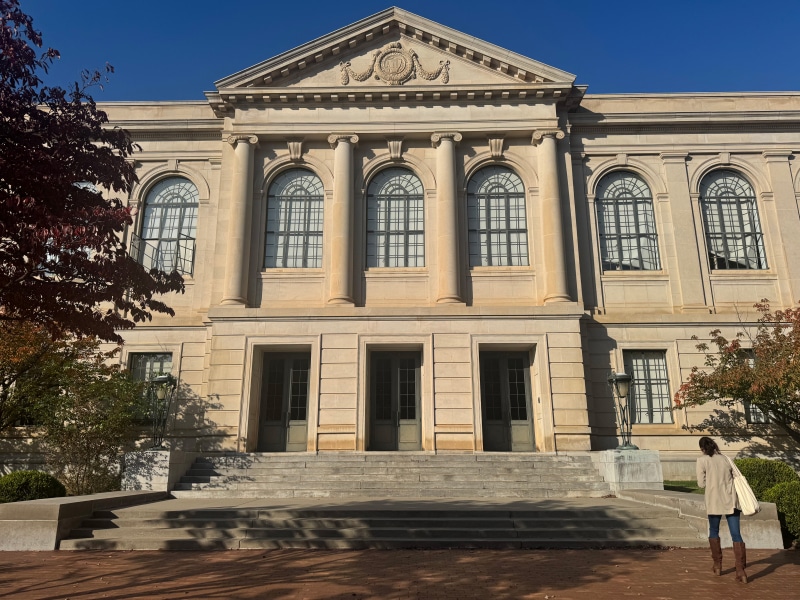
The E. Fay Jones School of Architecture and Design Building.
The second day of the Administrators Conference took place on the University of Arkansas main campus at the E. Fay Jones School’s Vol Walker Hall and Steven L. Anderson Design Center. That morning’s sessions covered best practices for managing community design centers; insights on effective fundraising and resource development; along with experiences and insights from deans and directors from around the world.
During the Core Values in Higher Education session, Kendall A. Nicholson, ACSA Senior Director of Research, Equity, and Education, offered his perspective on the principles of architectural education. “While the socio-political climate across the country continues to evolve, our collective values really should remain the same. If our values are tied to architectural licensure or architectural accreditation, then the practice of architectural education is in peril,” said Nicholson. “Take, for example, the public good. Architecture, as defined by faculty across [ACSA] member schools, is often said to benefit the public good. This has to be a position we hold firm. And if you can’t talk about the public good, or you can’t talk about social justice, or climate change, or health, then it’s practically impossible to teach it as a value.”
Following the discussions, attendees gathered for an evening keynote delivered by Chancellor Sharon L. Gaber, Ph.D, of the University of North Carolina at Charlotte. Gaber has led UNC Charlotte on a bold 10-year strategic plan that articulates a new vision to drive discovery and innovation as a globally recognized public research university. During the keynote address, she shared her experience transitioning from urban planning to university leadership. “Leading a large university feels a lot like leading a small city,” Gaber shared. She highlighted the pressures and possibilities that are impacting the changing academy, including policy shifts, accreditation, academic freedom, and more. Attendees took notes as she shared Four Practical Leadership Principles: Listen, Communicate, Empathy, and Meaningful Interventions.
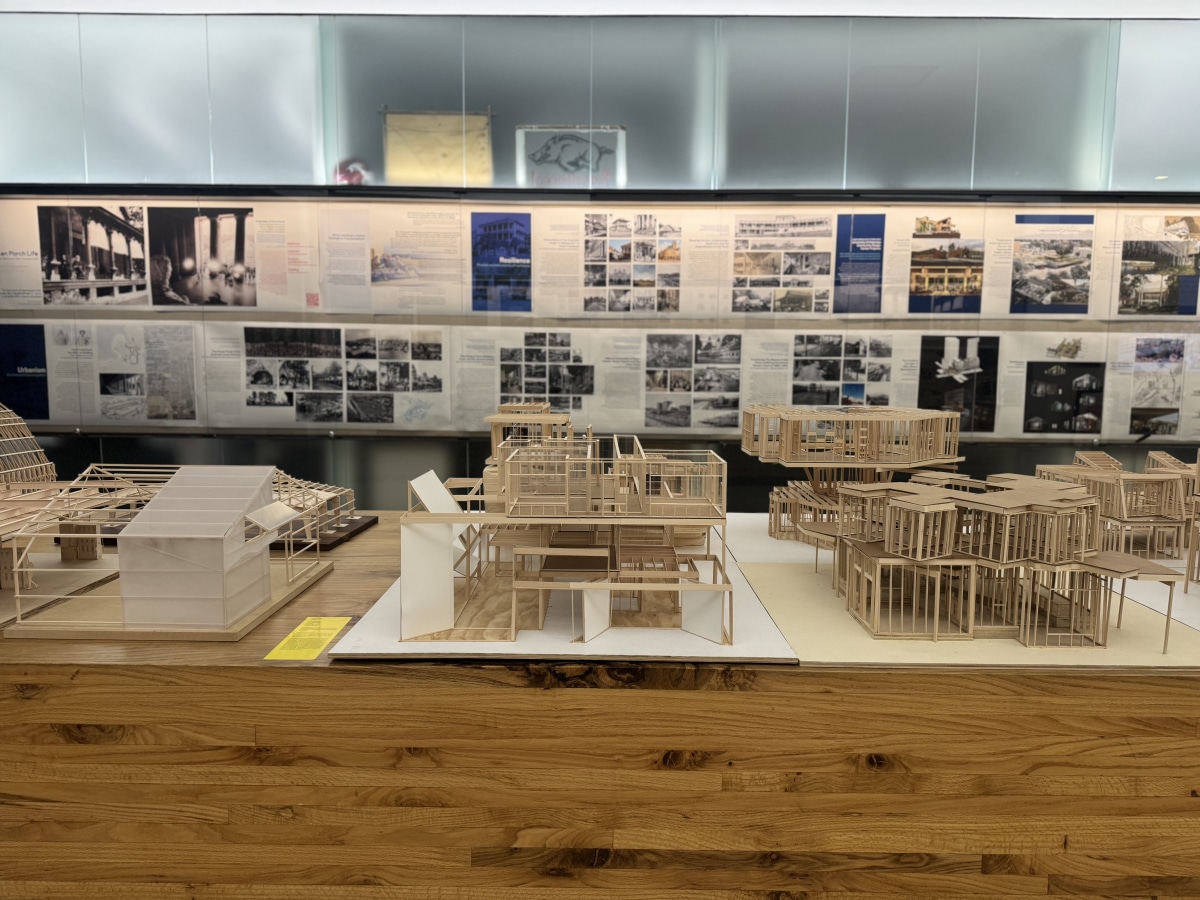
The day ended with a reception in the Smith Gallery, which displayed remarkable projects created by University of Arkansas architecture students. Attendees gathered to exchange ideas and experiences while looking forward to the day ahead.
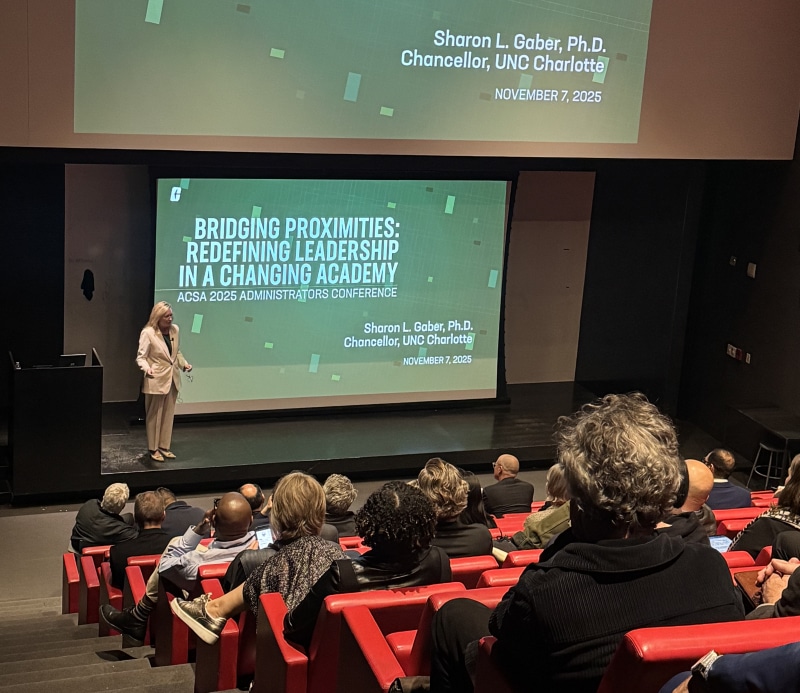
Chancellor Sharon L. Gaber presenting the Friday evening keynote.
Day Three
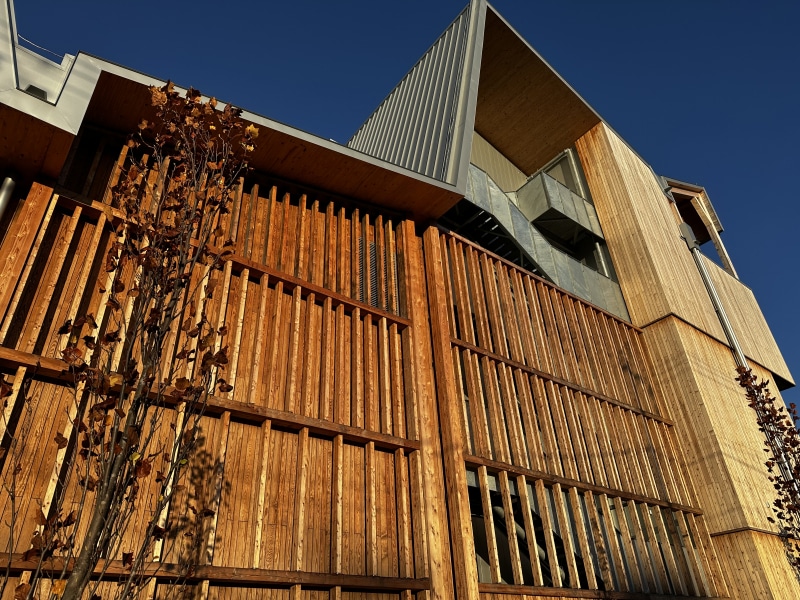
Exterior of the Anthony Timberlands Center.
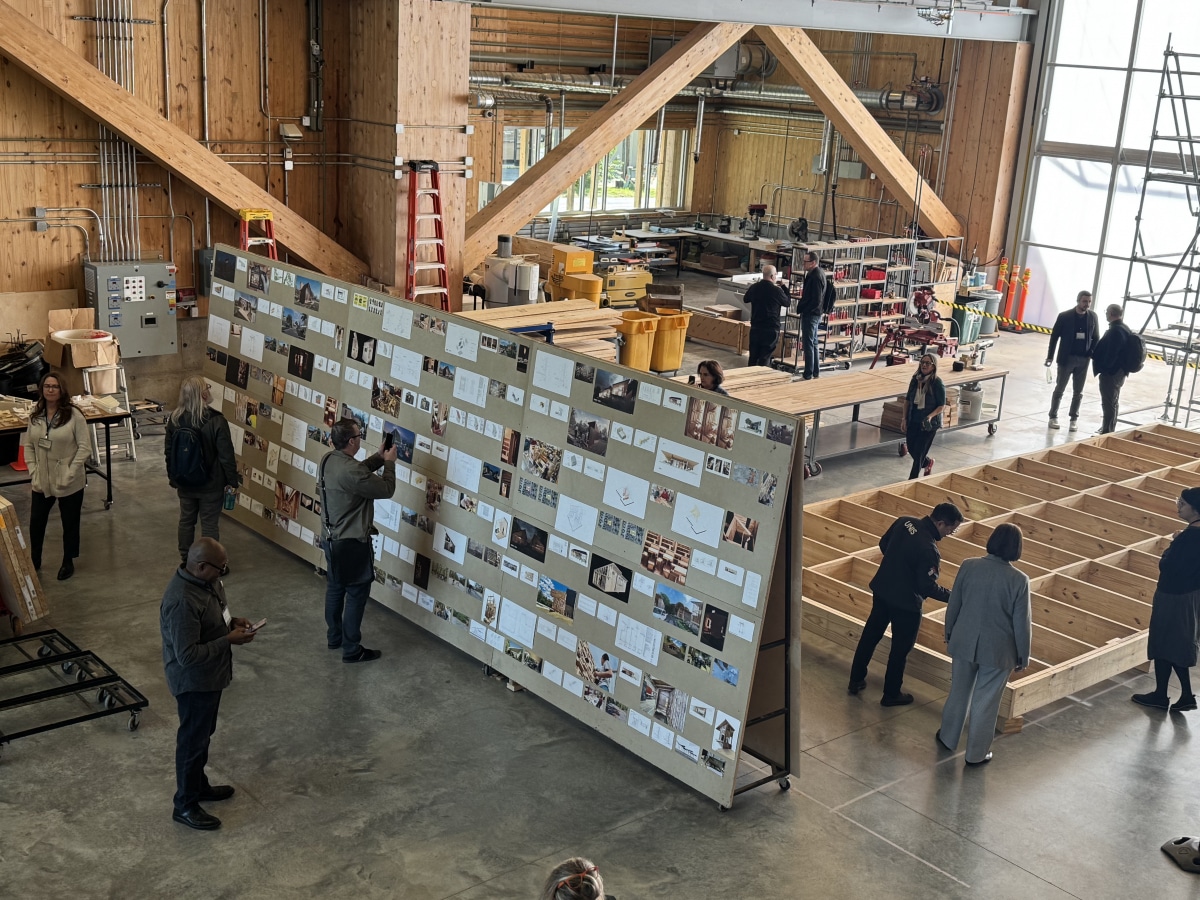
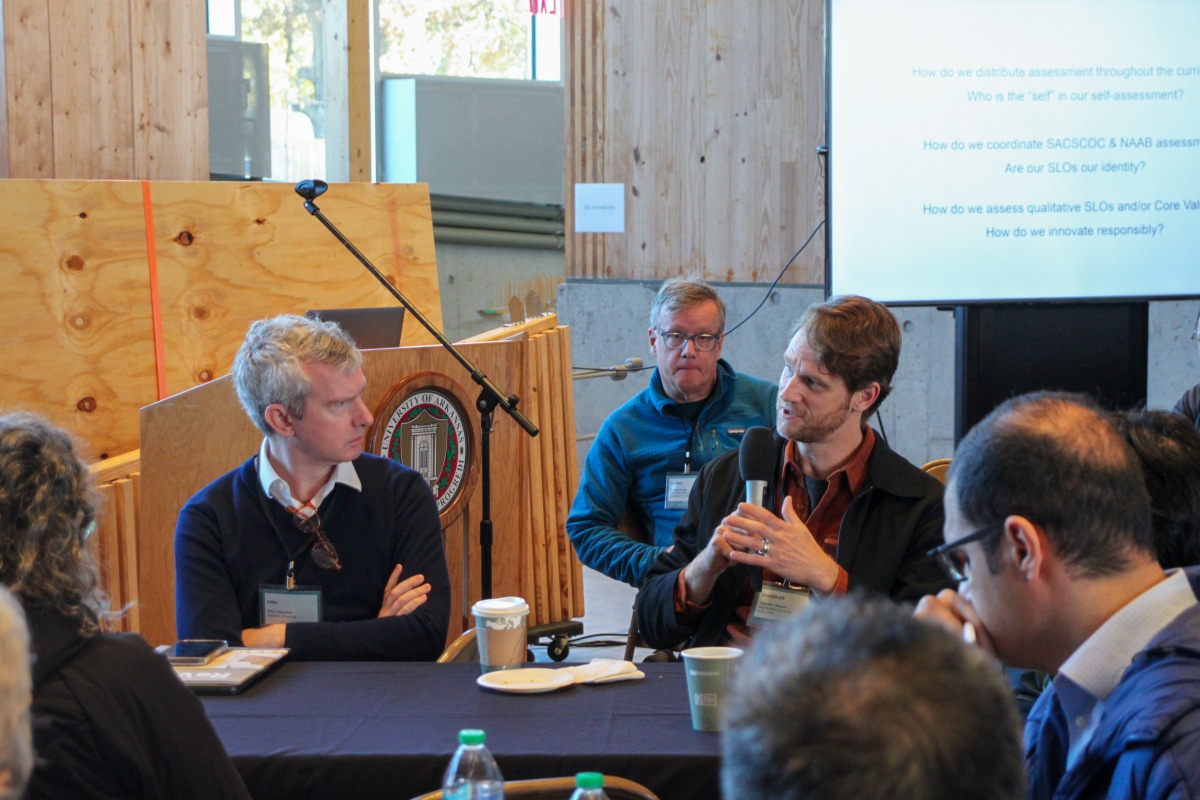
The final day of the conference began at the Anthony Timberlands Center for Design & Materials Innovation. The newest addition to the University of Arkansas’ Art and Design District, the Anthony Timberlands Center officially opened on August 28, 2025. This state-of-the-art building is home to the Fay Jones School’s design-build and timber-focused programs. The day began with sessions that shared approaches to assessment and the articulation of learning outcomes for undergraduate and graduate level students. The morning sessions also tackled evolving competencies in architectural education and strategies for securing research funding.
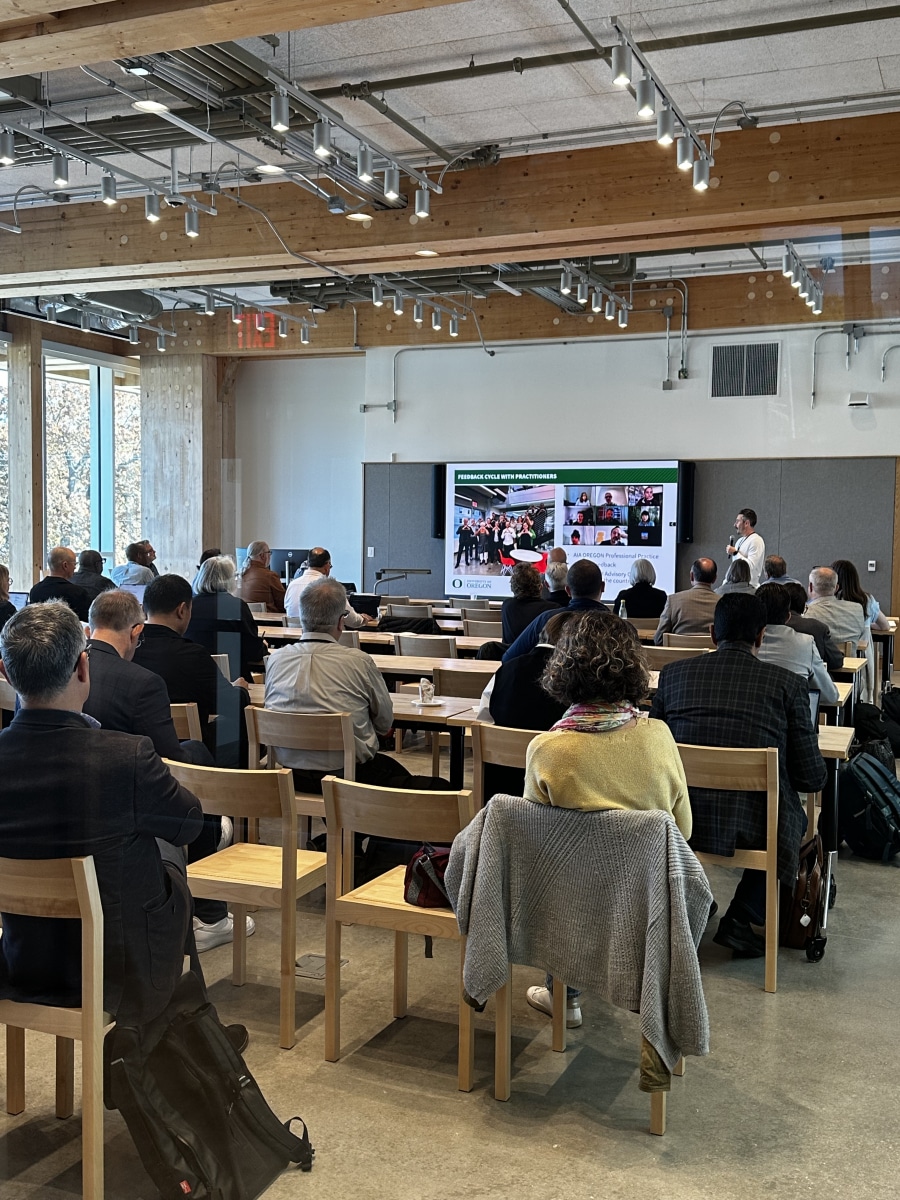
The conference officially concluded with an Administrators’ Workshop led by Renée Cheng of Arizona State University and Beth Lundell Garver of the Boston Architectural College. The workshop included a series of conversations among new and experienced administrators on the challenges –and rewards– of academic leadership. Later that afternoon, attendees had the opportunity to participate in post-conference programming. The National Architectural Accrediting Board (NAAB) led How to Conduct a Successful On-Campus Site Visit, a hands-on workshop on the essentials for preparing for a successful accreditation visit under the NAAB 2020 Conditions and Procedures. Additionally, the post-conference Contemporary Architecture Tour explored the dynamic architectural landscape of Northwest Arkansas, from the work of world-renowned architect Marlon Blackwell to thoughtfully designed public spaces and sustainable developments.
Overall, the 2025 Administrators Conference brought together academic leaders of all levels who walked away with broadened tools and perspectives that will evolve their practice.
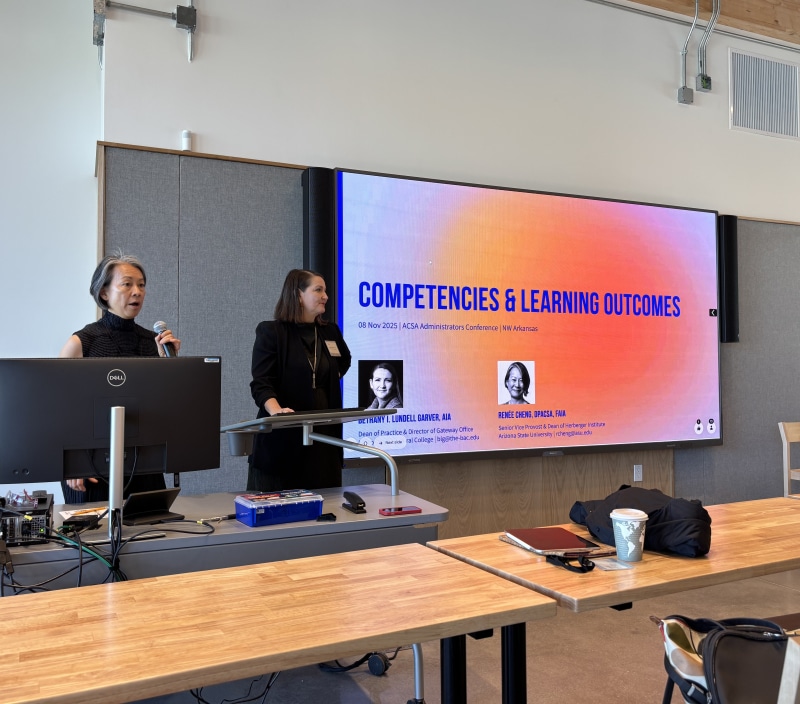
Renée Cheng and Beth Lundell Garver leading the Administrators’ Workshop.
Interested in continuing the conversations that were started during the 2025 Administrators Conference? Stay tuned for upcoming ACSA Conference announcements.
Photo Album Recap
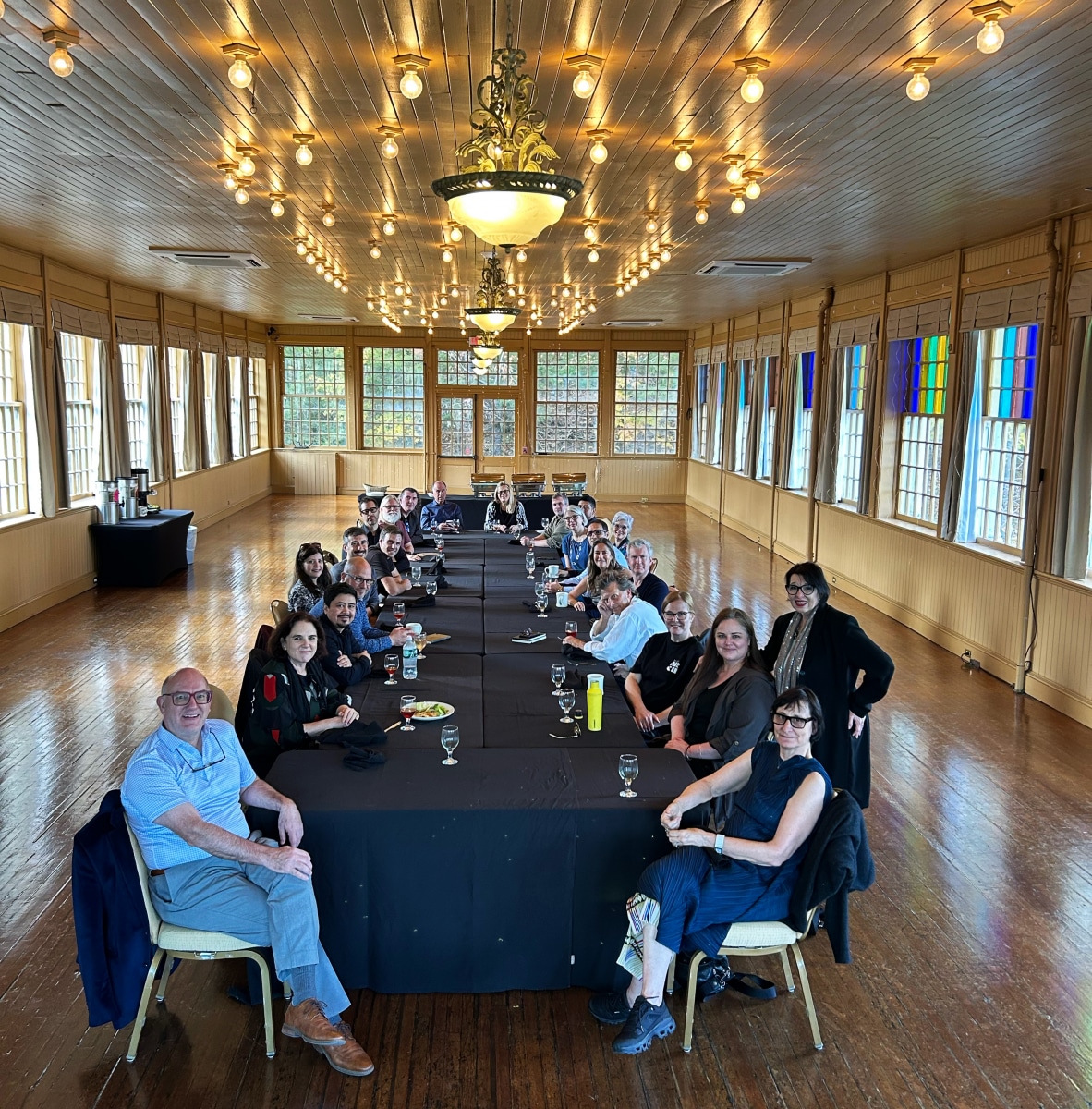
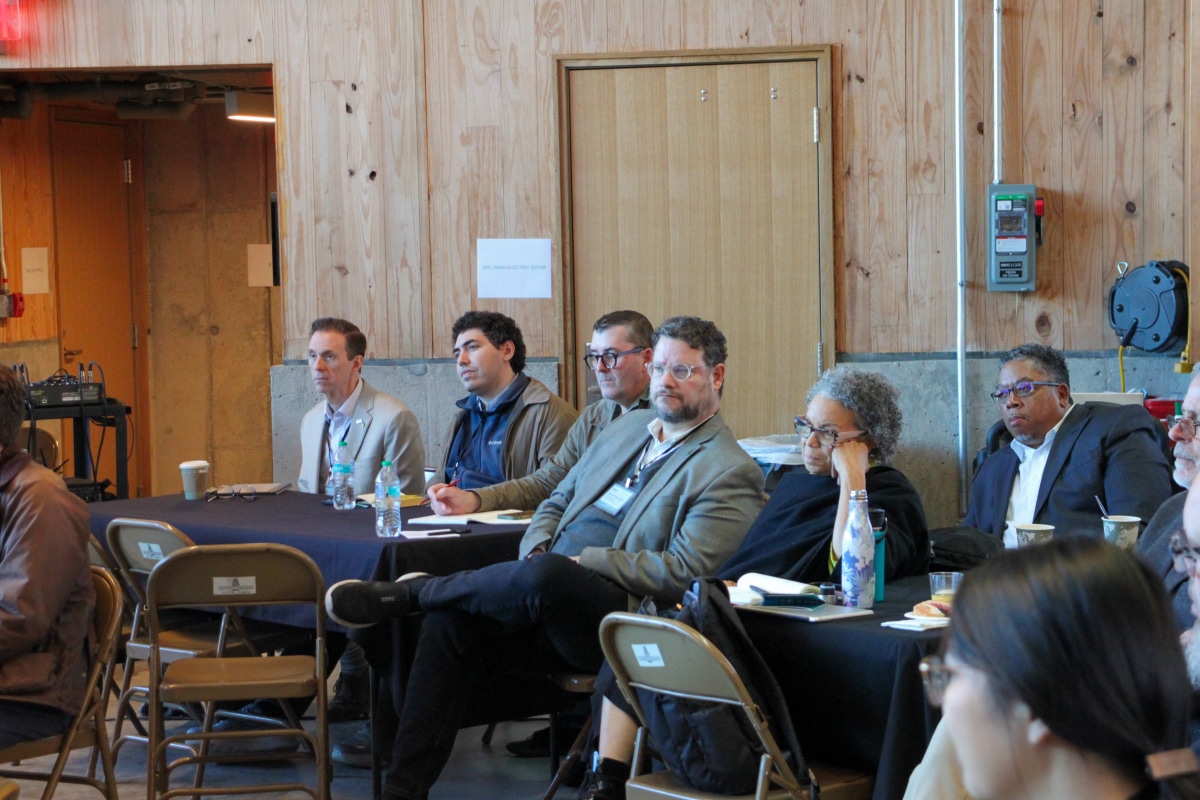
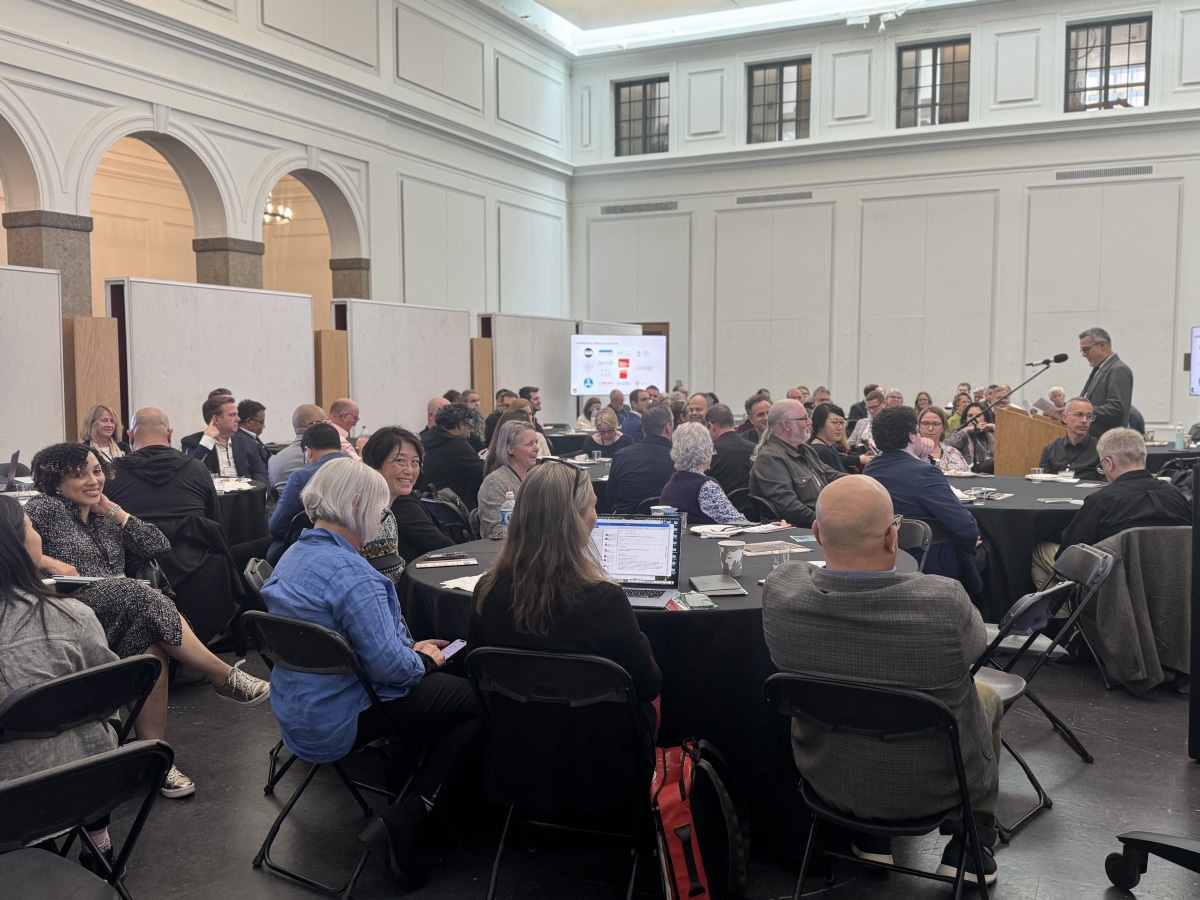

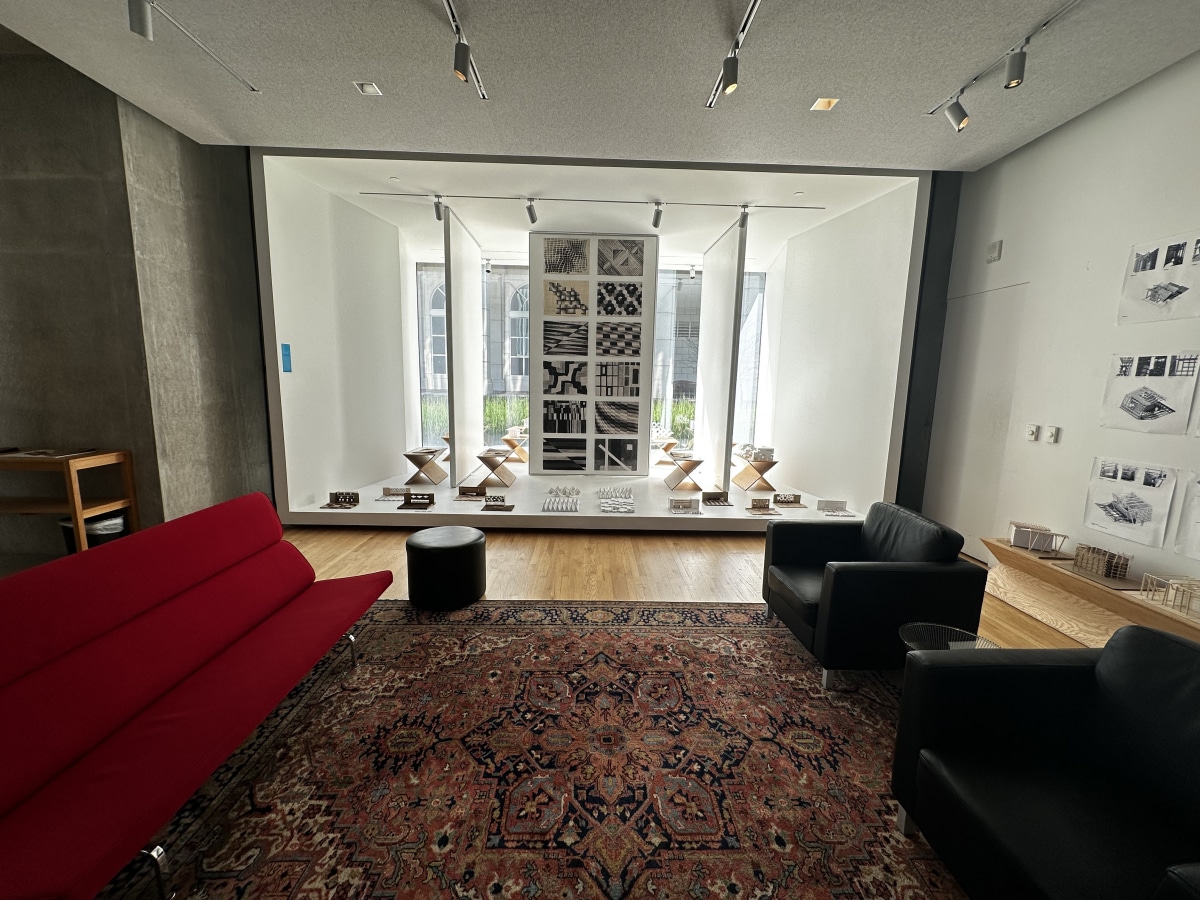
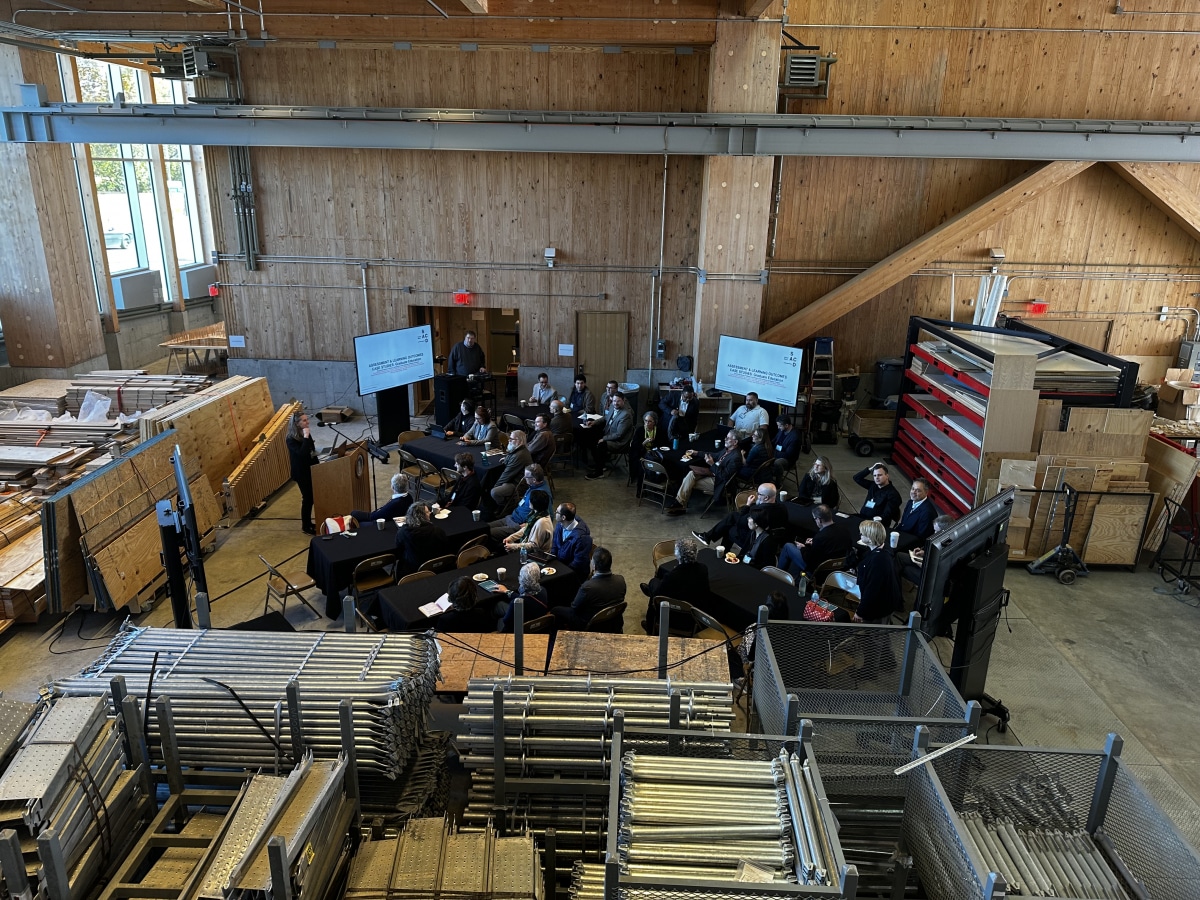
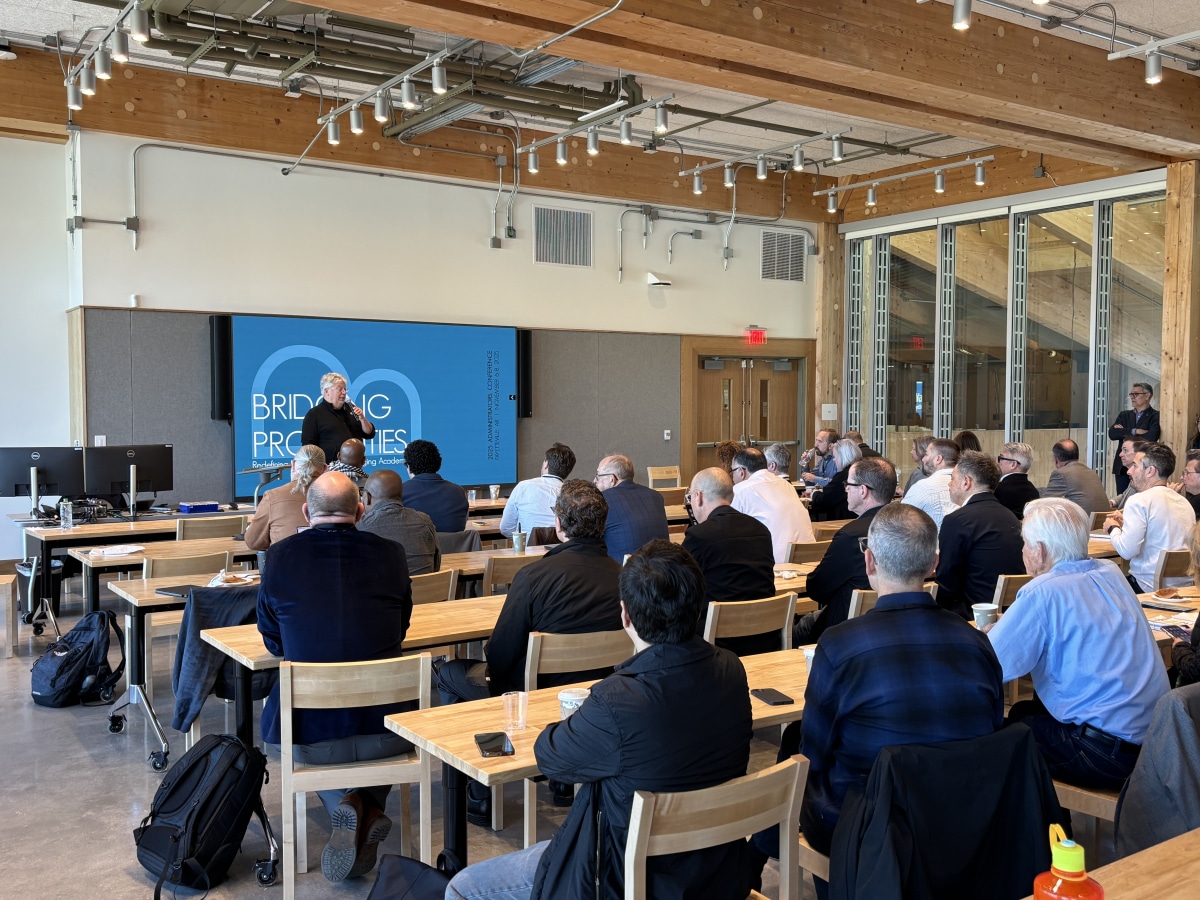
Please visit ACSA’s Flickr account to access more photos (Day One, Day Two, Day Three).
CONFERENCE PARTNERS



Questions
Michelle Sturges
Conferences Manager
202-785-2324
msturges@acsa-arch.org
Eric W. Ellis
Senior Director of Operations and Programs
202-785-2324
eellis@acsa-arch.org
