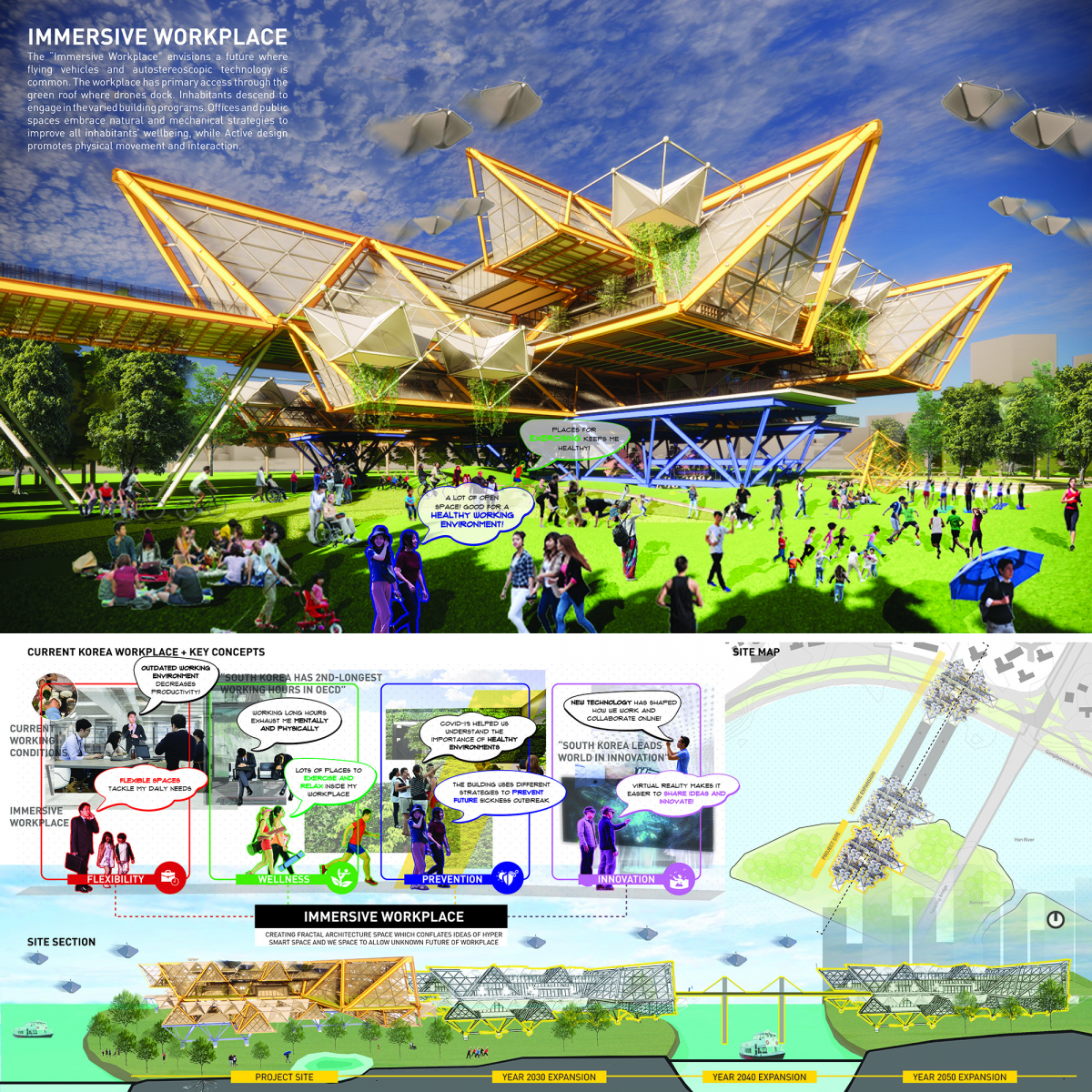
For a variety of reasons, it is expected many workers will never return to the “office” on a permanent, or full-time basis. For others, however, forced isolation created social and physical detriment, loss of production, lower creativity, challenged communication skills, deteriorating friendships, and more. Beyond the individual, the loss of physically in place urban office workers had a deleterious effect on most urban centers. Public transportation, restaurants, hotels, public venues, outdoor recreation, supporting businesses, and much more were damaged or, in some cases, lost. Therefore, this project has as its focus both the individual as well as the urban center.
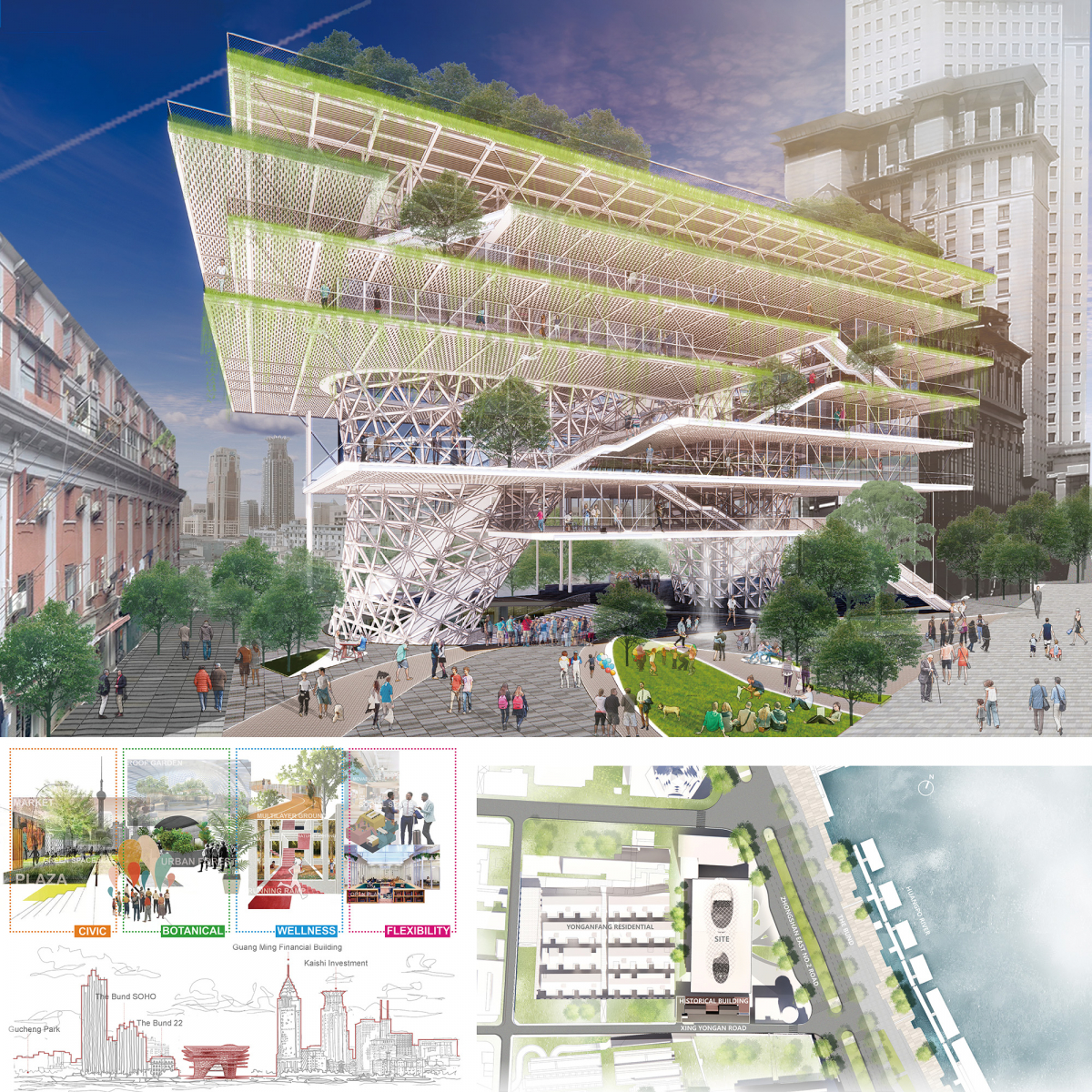
The urban center selected for this study is considered one of the most vibrant and active in the world. Shanghai, a city of twenty-five million, has over 700 regional headquarters. Most are in central Shanghai near the world-famous Bund area on the Huangpu River. Shanghai’s contemporary architecture is often adventuresome, experimental, and open to technological innovation. While our project remains committed to the Shanghai’s iconic architecture, it also builds a healthy and active relationship with pedestrians and nearby neighborhoods.
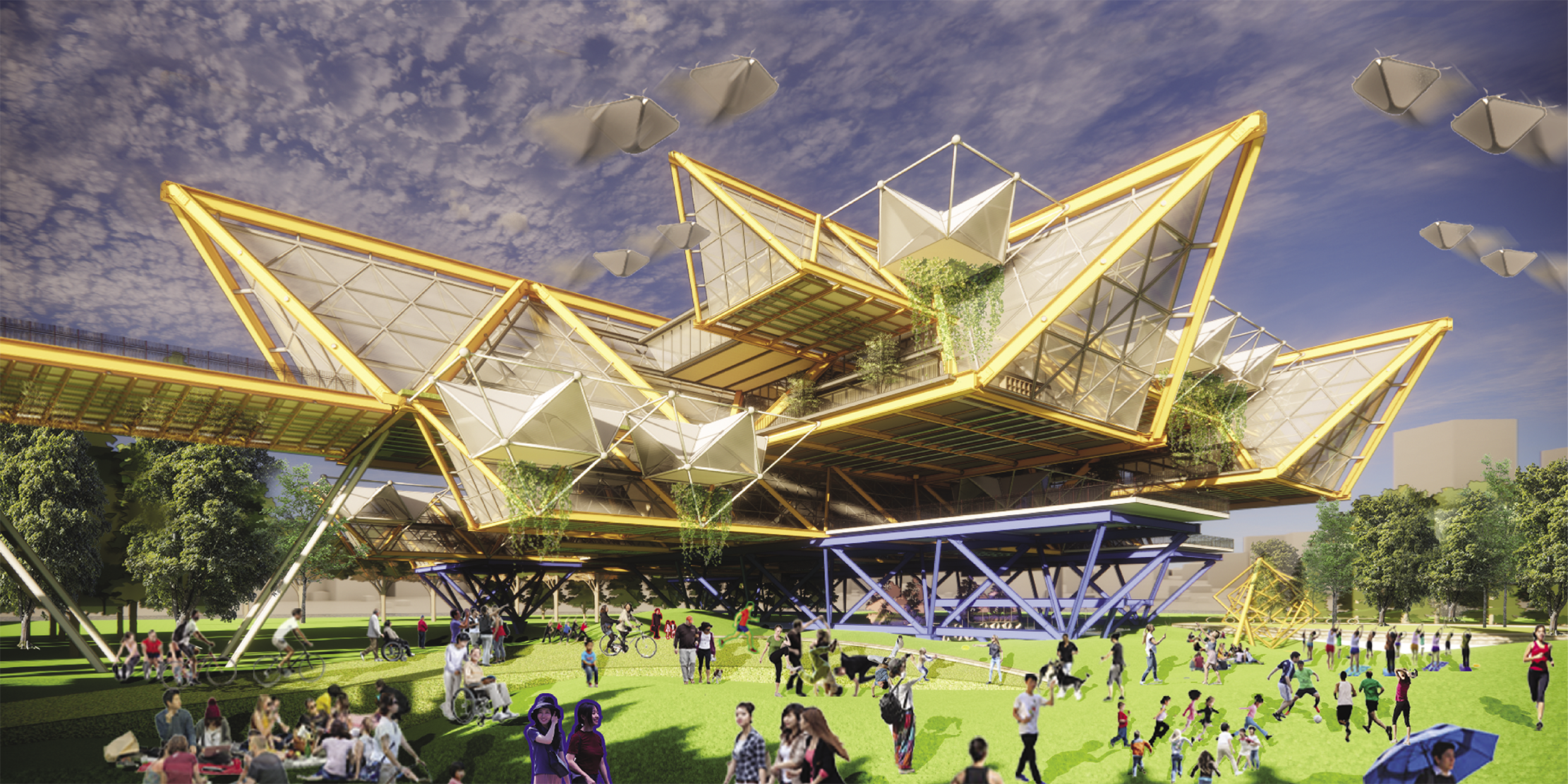
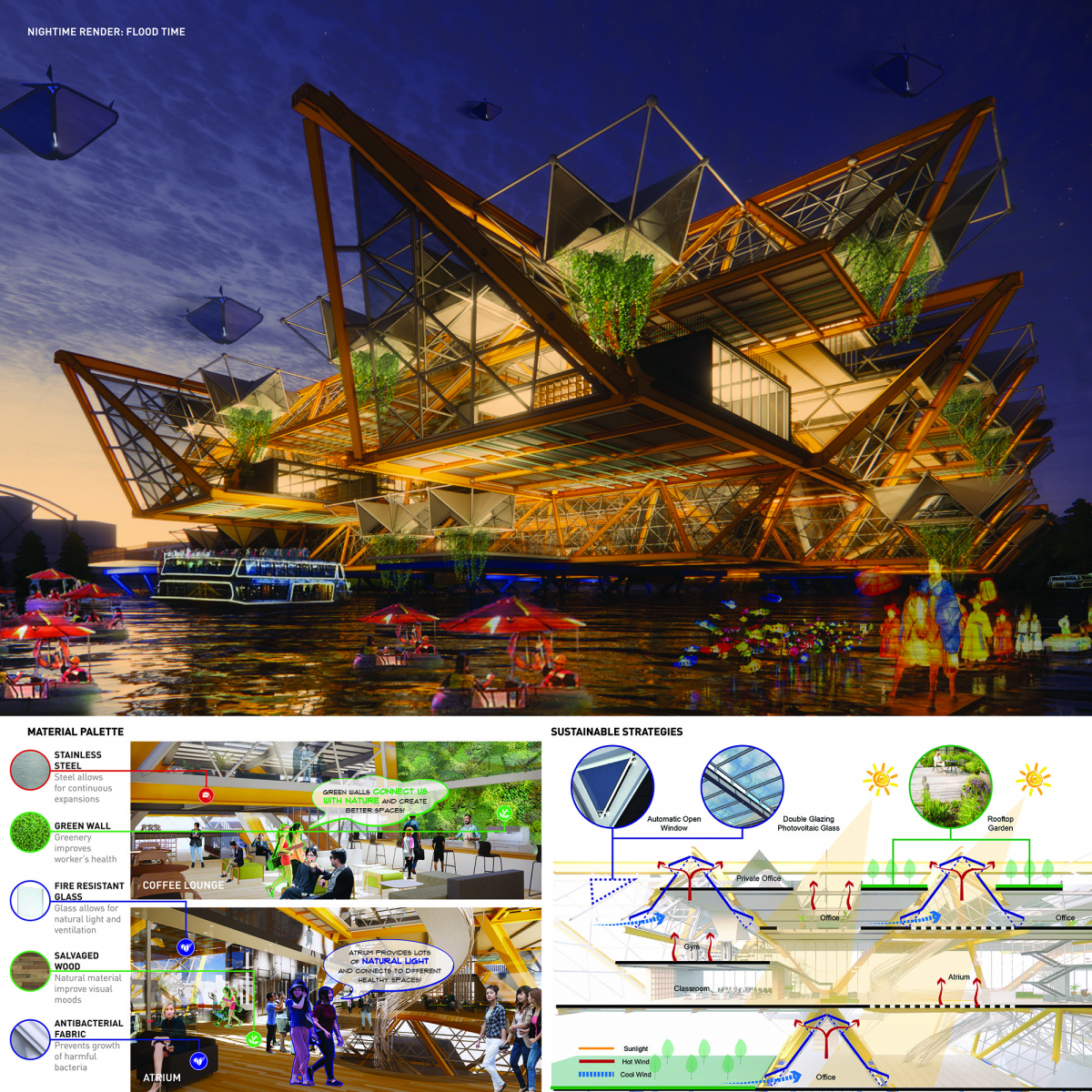
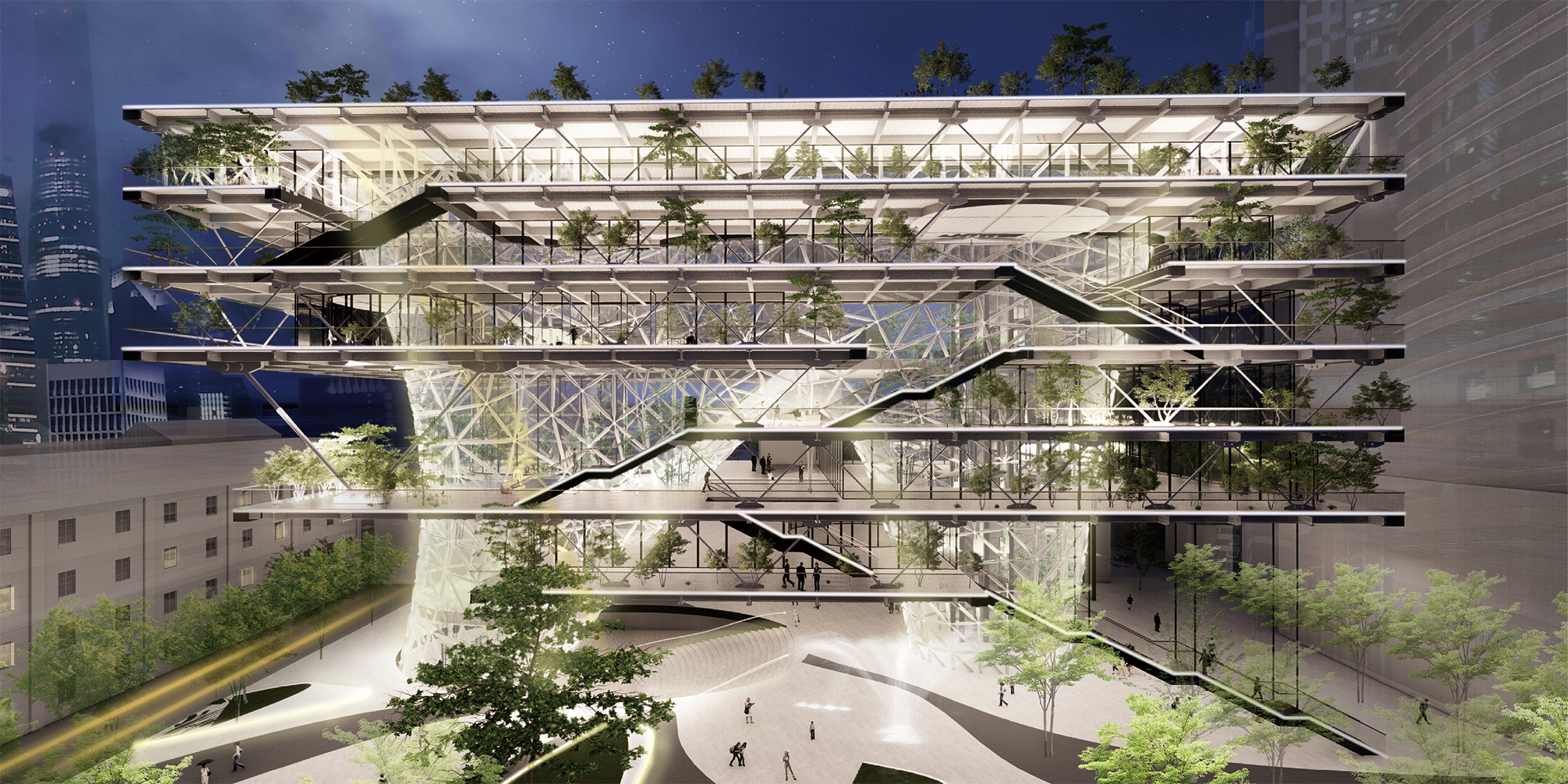
Opening edges along all sides of the building allows the public, and the office building, to flow into and through the site. Sunken plazas, green spaces which continuously flow from the ground into architecture help blur the line between architecture and landscape. Workers can move from office space to urban space to enjoy fountains design for civic recreation. Additionally, the lower levels are integrated into the upper urban spaces which allows retail, food vending and additional commercial spaces to share the urban landscape.
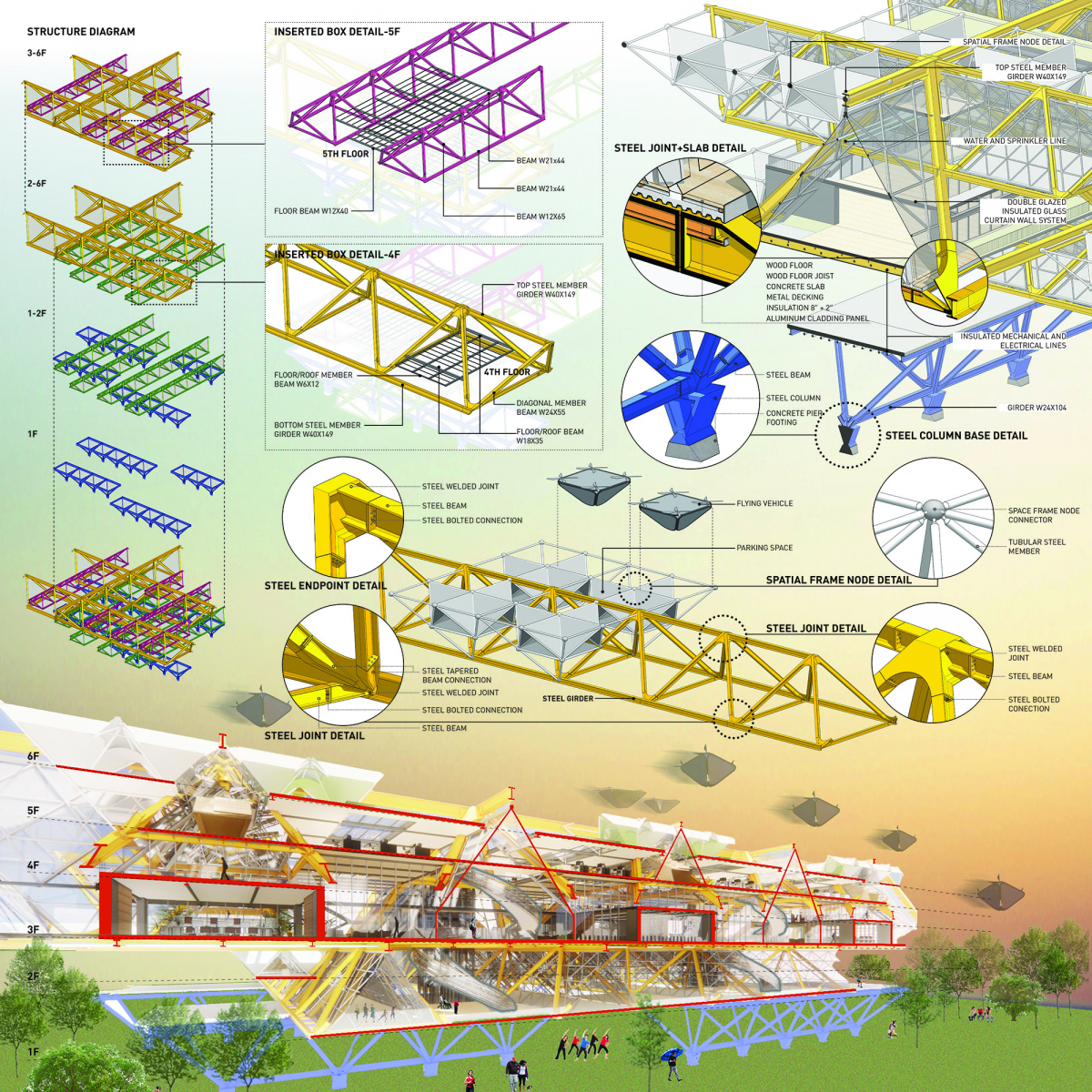
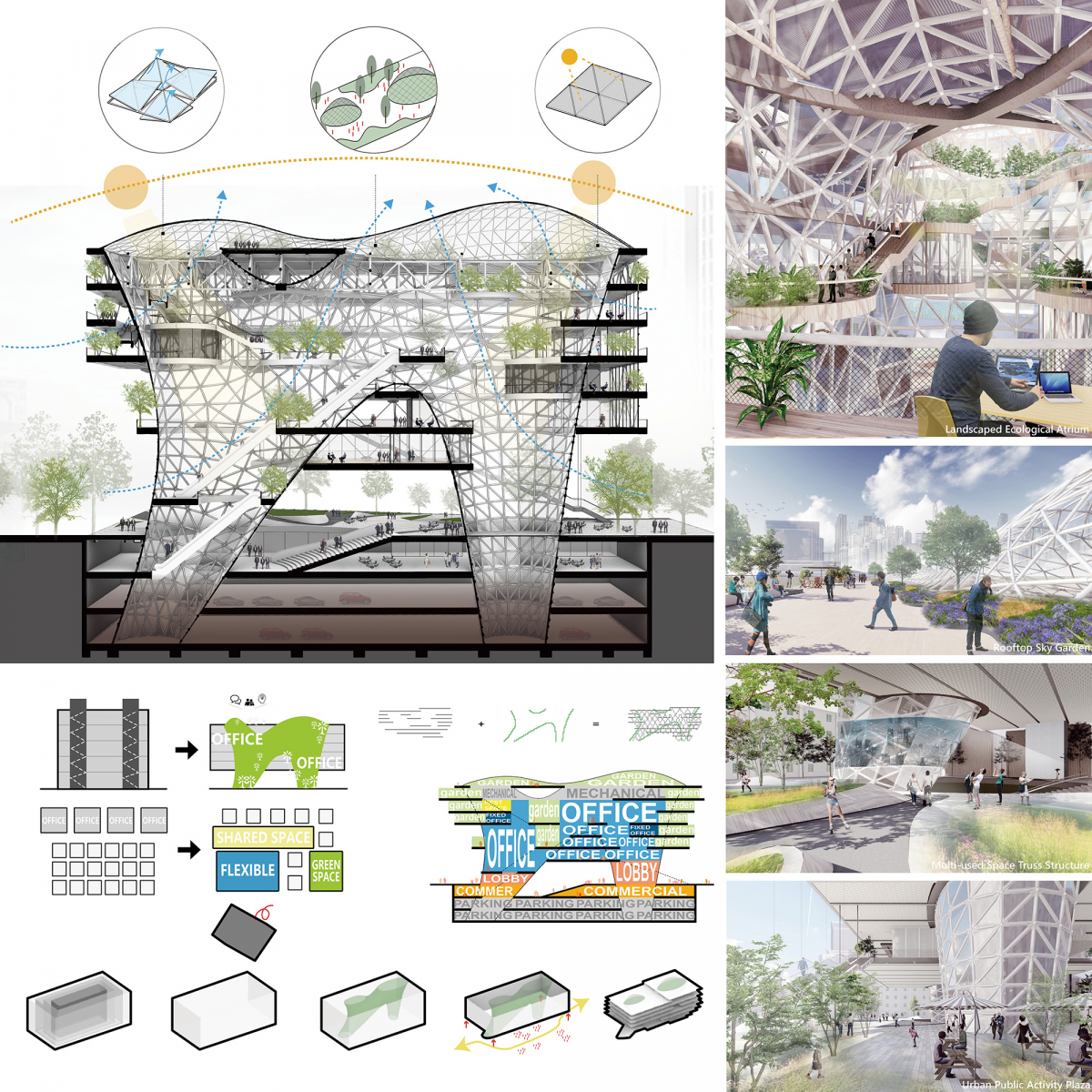
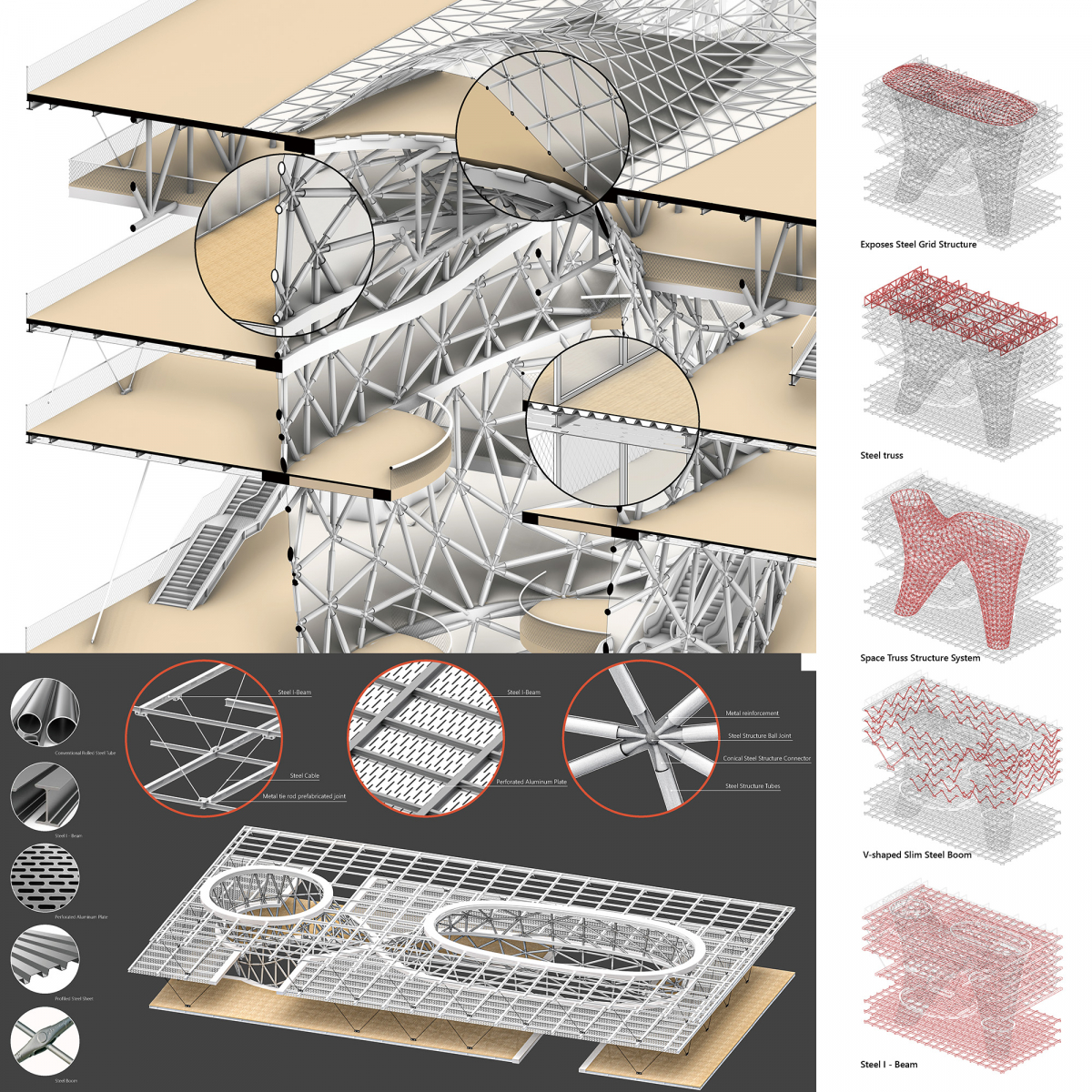
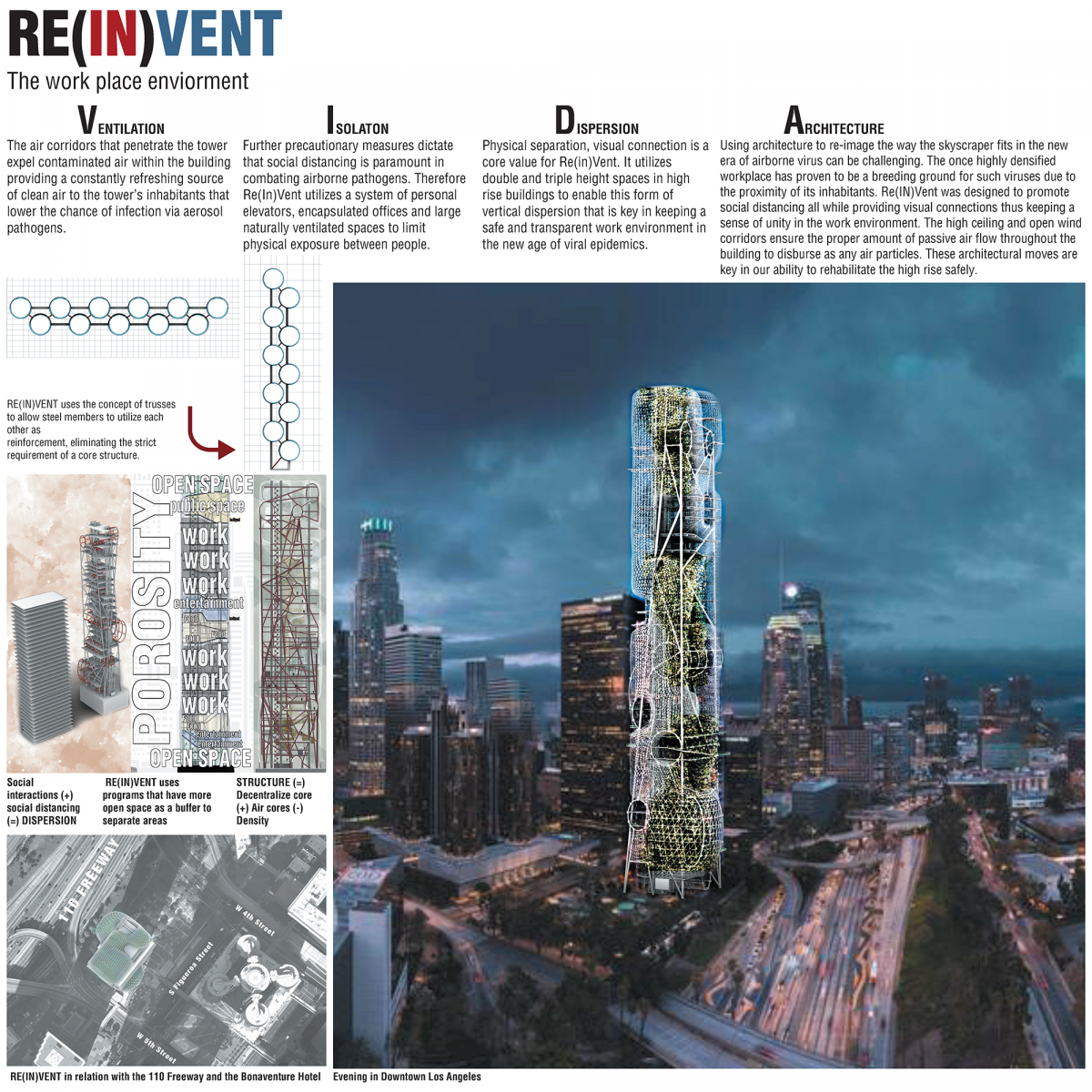
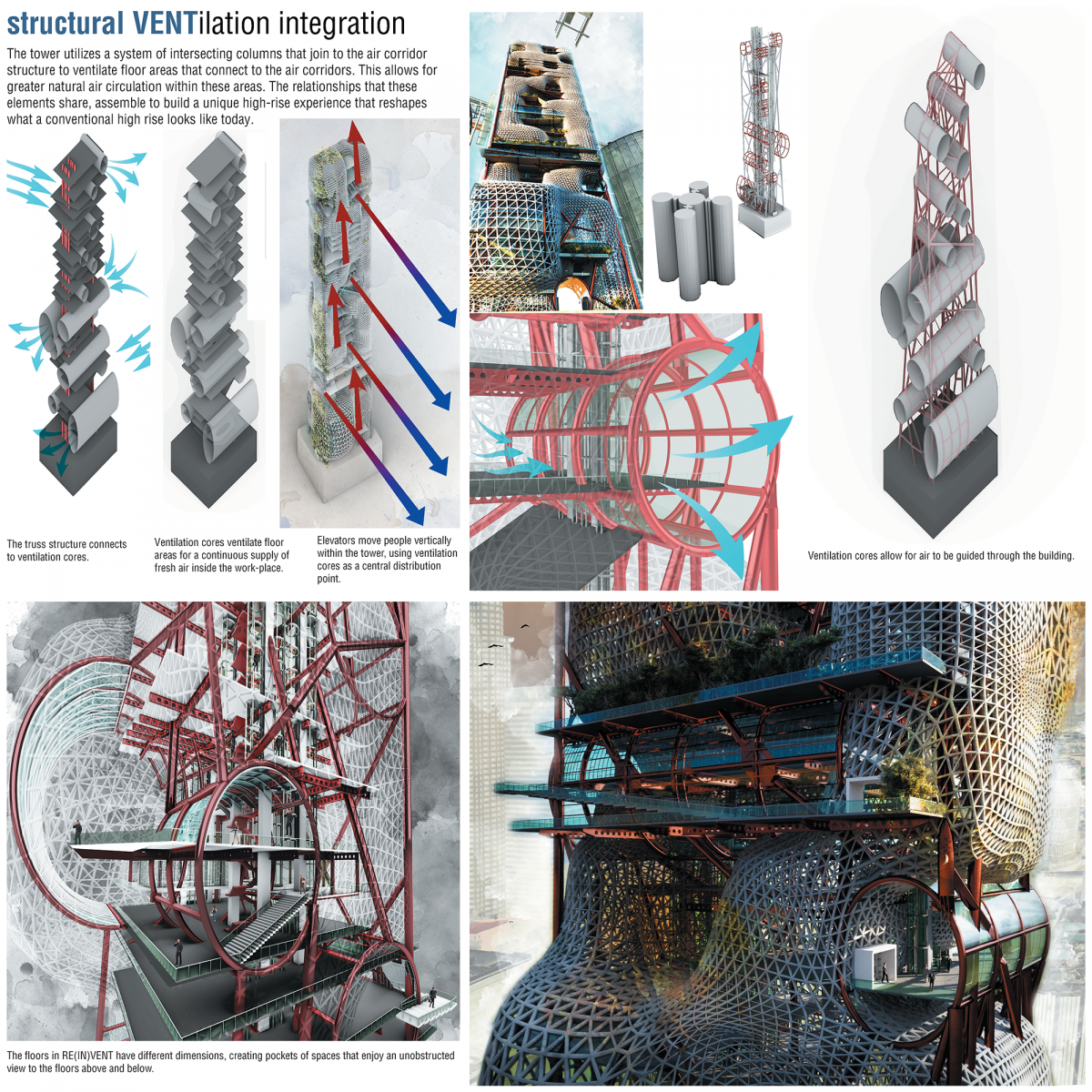
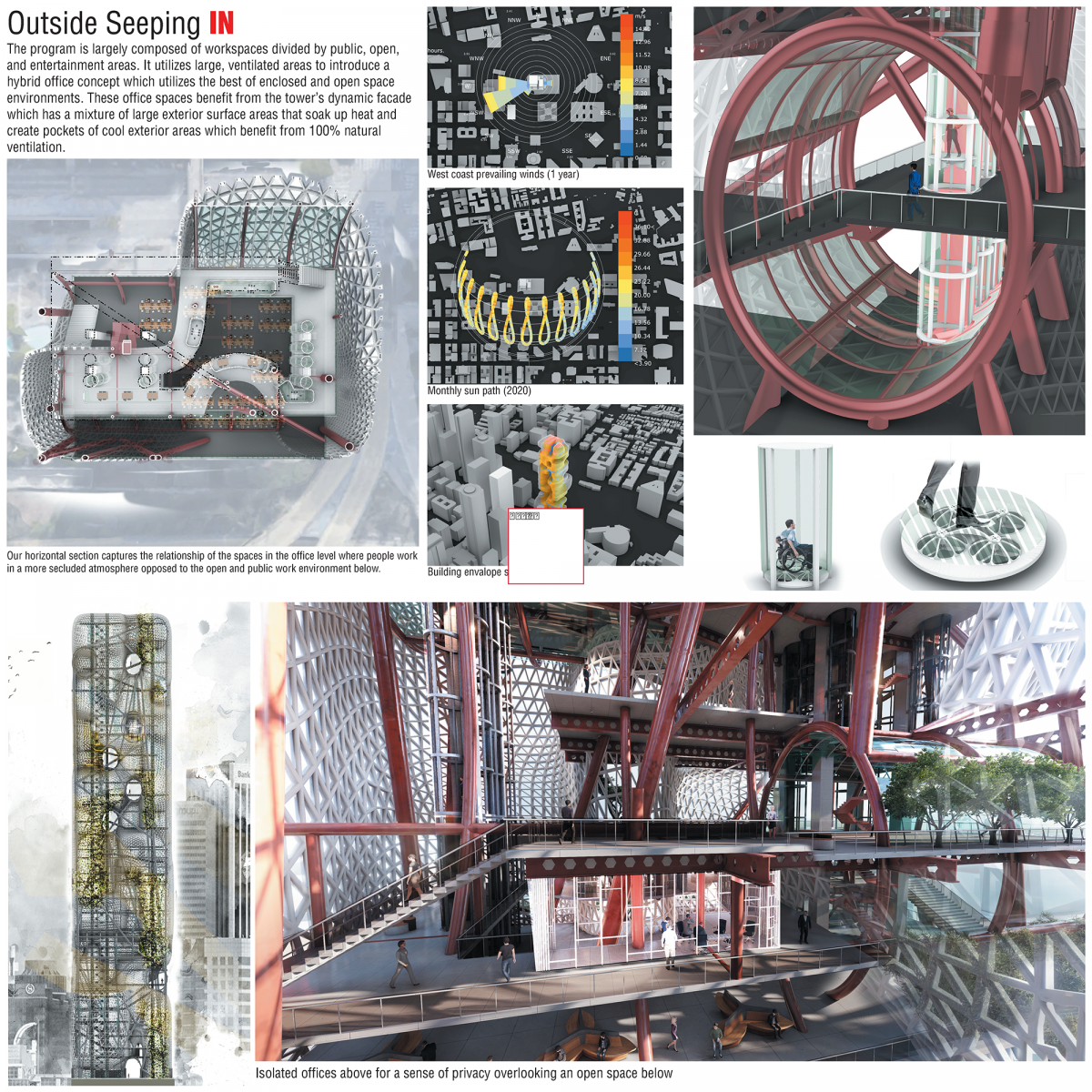
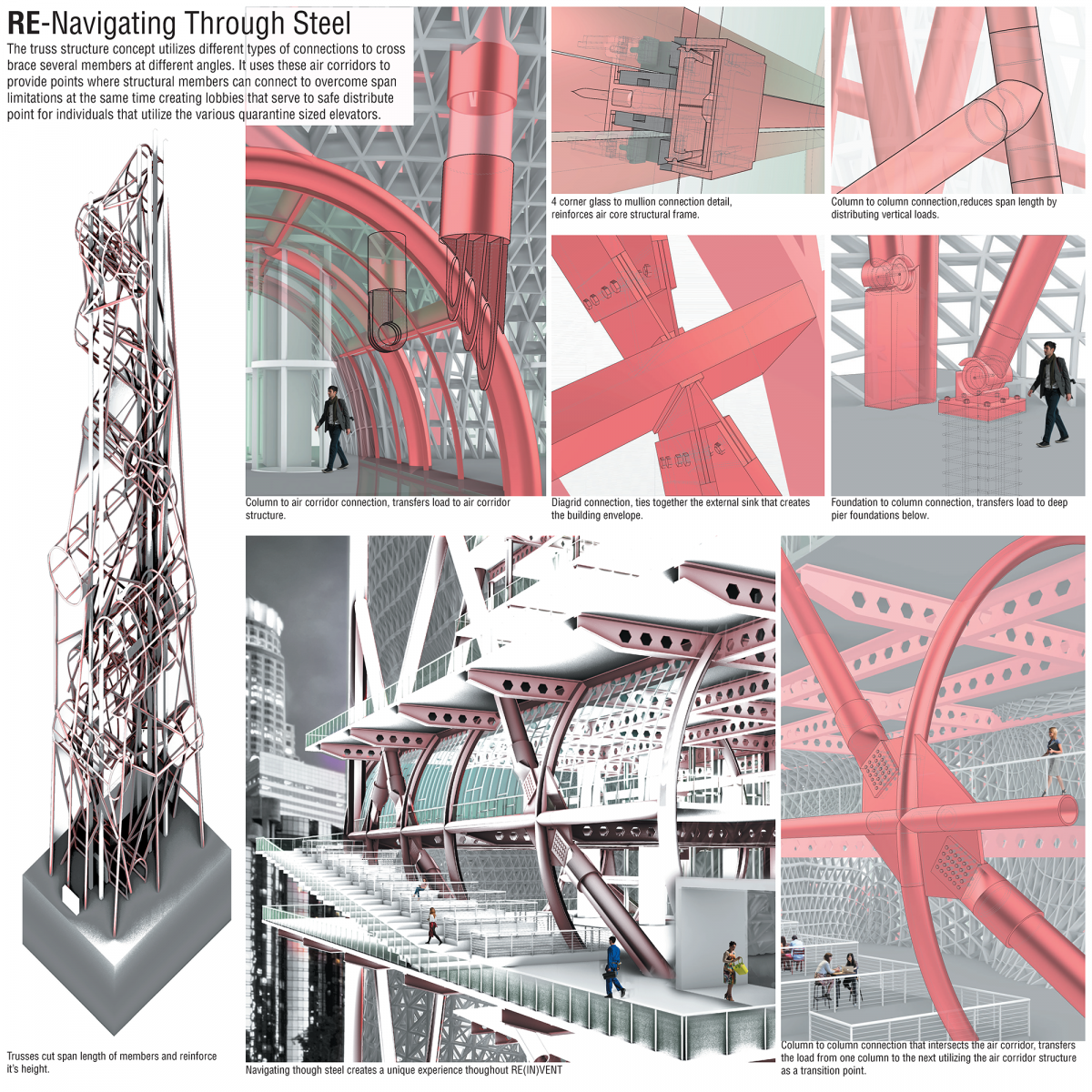
The traditional elements of light, ventilation, and greenery are employed throughout for occupant wellness. Two large steel and glass cores flood all spaces with quality light, clean air, and luscious greenery. Connecting slabs, suspended by steel cables, are active green spaces which dilute the boundaries between inside, outside and the core. The environment is healthy and active.
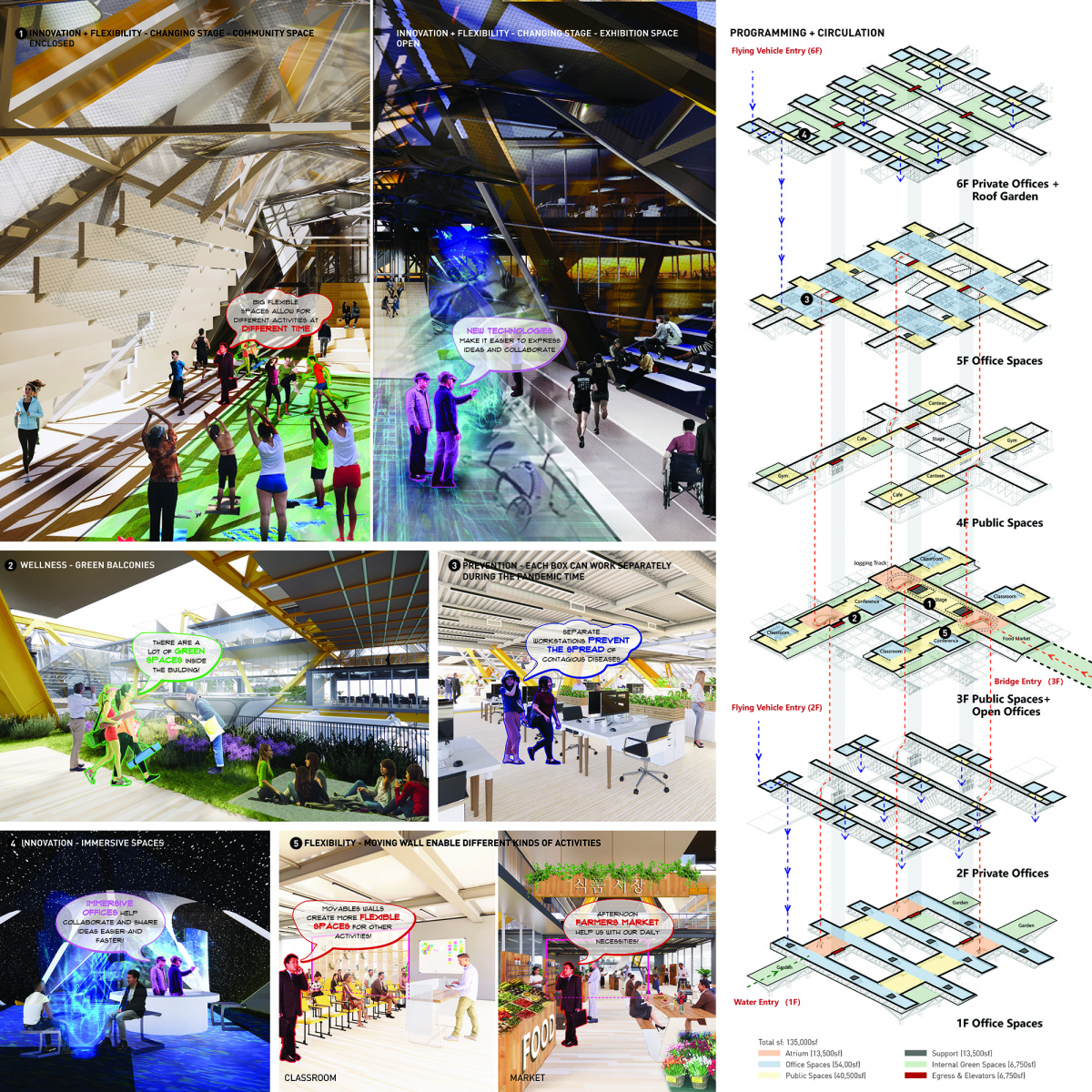
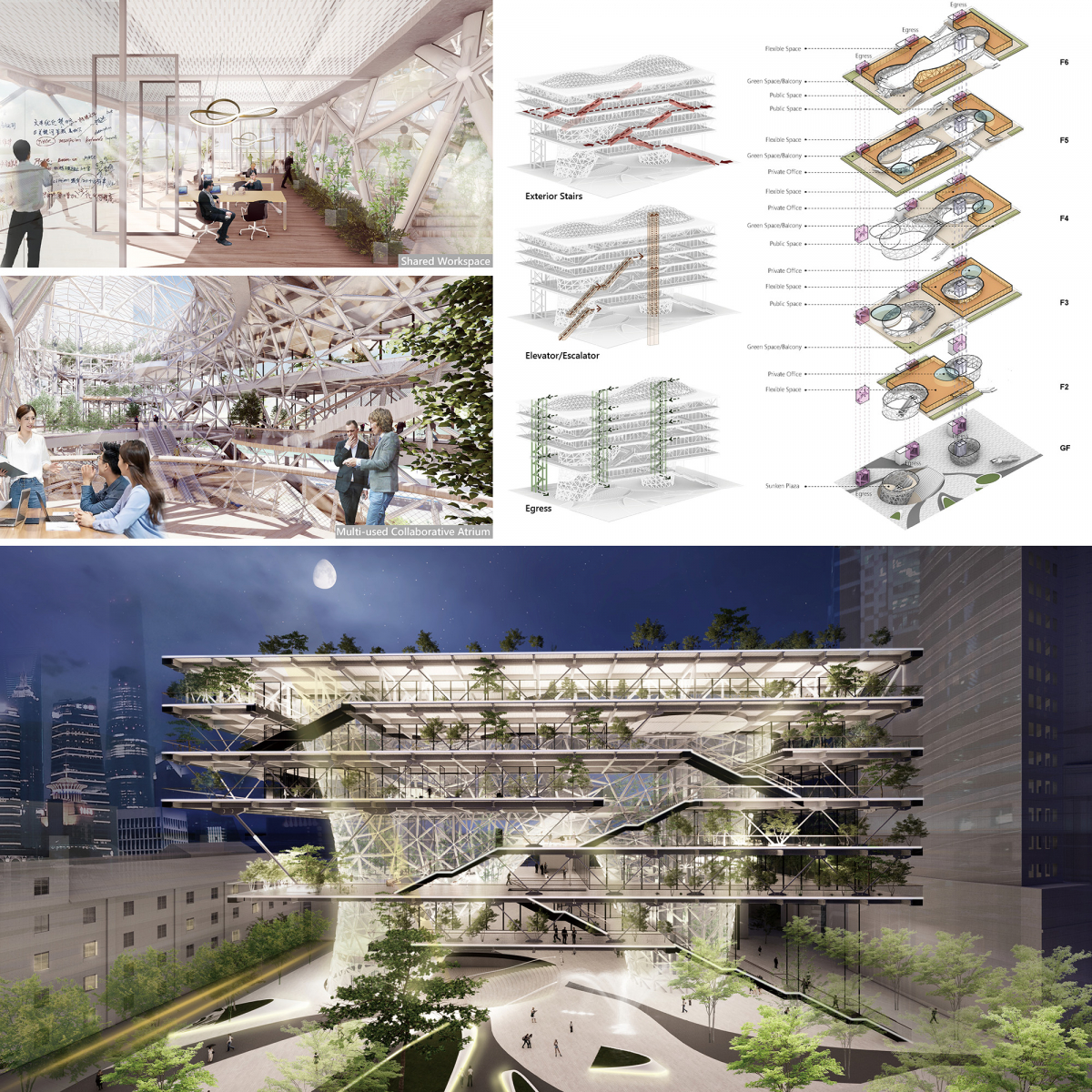
Occupant activity and distancing are emphasized through extending pedestrian routes and integrating a running ramp through the gardens and other areas. By enlarging the pedestrian traffic areas, these become spaces for socializing, sharing ideas, and creating visions of the future.
Flexibility to adjust to time and activities is supported by systems that allow office to be divided in smaller or larger spaced by a variety of users. Most public and private spaces are multi-dimensional and interactive. They are designed to encourage many levels of communication and collaboration while keeping the spaces healthy and receptive.

 Study Architecture
  ProPEL